Public Transportation and Commuter Options in Montclair NJ
By Sorelle Crooks, Realtor® | Real Broker LLC | NJ License #2185837
Published June 14, 2026 · Last updated October 19, 2026
The commute is usually the first thing NYC buyers ask about when they're considering Montclair. And it should be - it's one of the biggest lifestyle changes you'll make. Here's the headline: Montclair has six NJ Transit train stations on the Montclair-Boonton Line, more than almost any other town in Essex County. That rail access, combined with bus routes, PATH connections, and solid highway options, makes Montclair one of the best-connected NYC commuter towns in Northern New Jersey. If you're looking at Montclair NJ real estate and the commute is a deciding factor, this is what you need to know.
A few things changed for riders in 2026, so treat the numbers below as current as of October. NJ Transit raised fares 3 percent on July 1, the second straight annual hike, a systemwide schedule reset took effect May 31, and the final Portal Bridge cutover runs October 11 through November 14, sending weekday Midtown Direct trains to Hoboken while the work happens. I'll flag what that means where it matters below, and you can dig into the details in my fare increase explainer, schedule changes guide, and Portal Bridge cutover post.
The Montclair-Boonton Line: Six Stations, One Town
Montclair is served by NJ Transit's Montclair-Boonton Line, which runs directly into New York Penn Station. What makes Montclair unusual - and genuinely advantageous - is that it has six stations within its borders:
- Bay Street - located in the heart of downtown Montclair, walkable to Montclair Center, restaurants, and shops. This is the station that downtown residents and renters most commonly use.
- Walnut Street - also in the central part of town, near the Walnut Street Train Station area where the farmers market operates on Saturdays.
- Watchung Avenue - serves the Watchung Plaza area, convenient for residents of the surrounding neighborhoods.
- Upper Montclair - located in the Upper Montclair neighborhood along Valley Road, serving the residential areas to the north.
- Mountain Avenue - a smaller stop that serves the neighborhoods between Upper Montclair and Montclair Heights.
- Montclair Heights - the northernmost station in Montclair, located near the Montclair State University campus. This station has a parking lot and is popular with commuters who live in the northern part of town or in nearby Little Falls and Verona.
Having six stations means that no matter where you live in Montclair, you're likely within a short drive or walkable distance from a train station. This is a significant advantage over many other Northern NJ commuter towns that might have one station - or none at all.
Commute Times to Penn Station
Here's what the commute actually looks like in terms of time:
- Express or limited-stop trains: roughly 40 to 50 minutes from the Montclair stations to New York Penn Station. These run primarily during peak commuting hours - morning inbound and evening outbound.
- Local trains: closer to 55 to 65 minutes, as they stop at every station along the way. These run during off-peak hours and on weekends.
- Frequency: during peak commuting hours, trains run roughly every 20 to 30 minutes. Off-peak, service is less frequent but still reliable, with trains running about once an hour.
- First and last trains: the first morning train typically departs around 5:30–6:00 AM, with the last train leaving Penn Station around midnight on weekdays. Weekend service runs on a modified schedule.
For context, a monthly pass for the Montclair-Boonton Line runs roughly $350–$450 after the 3 percent fare increase on July 1, 2026, depending on the station and fare zone. This covers unlimited rides, which makes it a solid value if you're commuting five days a week.
PATH Connections via Hoboken and Newark
While the Montclair-Boonton Line runs directly to Penn Station, there are also PATH connection options worth knowing about:
- Some Montclair-Boonton trains terminate at Hoboken Terminal instead of Penn Station. From Hoboken, you can transfer to the PATH train system, which provides service to the World Trade Center, Christopher Street, 9th Street, 14th Street, and 33rd Street in Manhattan. This is useful if you work in Lower Manhattan or the West Village rather than Midtown.
- Newark PATH connections: by transferring at Newark Broad Street station (accessible via NJ Transit), you can reach the PATH system for service to the World Trade Center and Journal Square. This is less direct than the Penn Station route but provides flexibility depending on where in the city you're headed.
For most Montclair commuters, the direct Penn Station route is the primary option. But having PATH alternatives in your back pocket is useful for days when you're heading downtown or need a different route.
That PATH connection becomes the main route for a stretch this fall: during the final Portal Bridge cutover from October 11 through November 14, 2026, weekday Midtown Direct trains from Montclair terminate at Hoboken, where NJ Transit cross-honors PATH into Manhattan. Plan for the transfer and extra time that month, then the direct Penn Station service returns.
Driving to NYC and Beyond
If you drive, Montclair's location gives you solid highway access for trips into the city and beyond:
- Garden State Parkway is easily accessible, connecting you to the broader NJ highway network and eventually to Newark and the Holland/Lincoln tunnels into Manhattan.
- I-280 runs nearby and connects to I-95 and the NJ Turnpike, giving you access to the tunnels and bridges into NYC.
- Route 46, Route 3, and Route 21 provide additional routing options depending on where you're heading.
The drive to Midtown Manhattan is roughly 30–45 minutes without traffic, but let's be realistic: traffic through the tunnels and into the city is rarely absent. During peak hours, budget 50–75 minutes for a drive into Manhattan. The Holland Tunnel and Lincoln Tunnel both have variable congestion, and toll costs add up - currently around $16–$17 during peak hours for passenger vehicles.
For many Montclair residents, driving into the city is a sometimes-thing rather than an everyday thing. It makes sense for weekend trips, evening events, or days when you need a car in the city. For the daily commute, the train is almost always more practical and cost-effective.
NJ Transit Bus Routes
In addition to the train, Montclair has bus service that connects to NYC and nearby towns:
- NJ Transit bus routes along Bloomfield Avenue provide service to Newark, where you can connect to PATH trains or additional bus service to the Port Authority Bus Terminal in Midtown Manhattan.
- Local bus routes connect Montclair to neighboring towns like Bloomfield, Glen Ridge, and East Orange, which is useful for errands and appointments if you don't have a car.
The bus is a secondary option for most Montclair commuters - the train is the primary one - but it's good to know the bus network exists for flexibility and for days when train service has disruptions.
Walkability Within Montclair
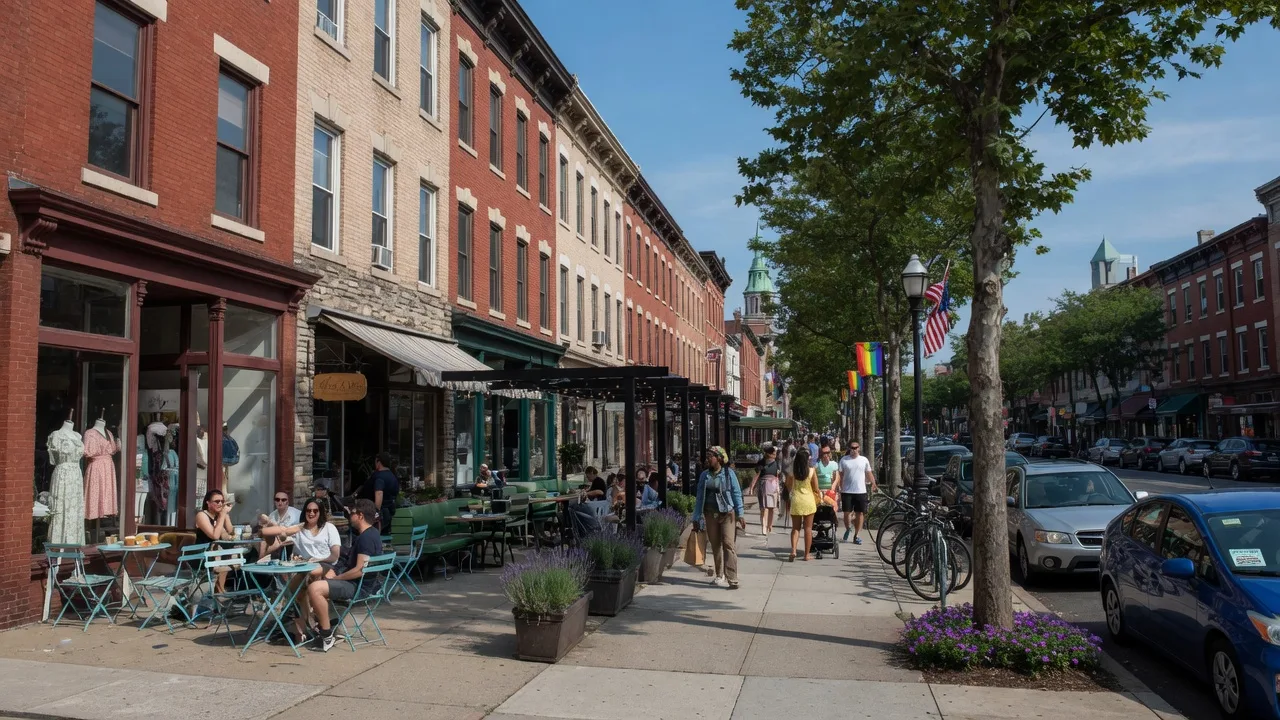
One of Montclair's advantages over many other commuter towns is its internal walkability. The downtown area along Bloomfield Avenue is genuinely walkable - restaurants, shops, the library, and several train stations are all accessible on foot. For residents who live near the downtown corridor, it's realistic to walk to dinner, the bookstore, or the train station.
Upper Montclair and other neighborhoods are more car-dependent for errands, but they're still walkable for exercise and neighborhood strolls. Montclair's tree-lined streets, parks, and sidewalks make it one of the more pedestrian-friendly towns in Essex County.
For bike commuters, the town has become increasingly bike-friendly, with dedicated lanes and paths that connect to the broader Essex-Hudson Greenway network. It's not Amsterdam, but it's improving - and for short trips within town, biking is a practical option.
The Transition from NYC Transit
This is the part I always talk through with my clients, because it's a real lifestyle shift. In NYC, transit is everywhere and runs constantly. In Montclair, you'll plan your commute more intentionally. You'll check schedules. You'll have a primary route and a backup. And you'll probably own a car for local errands, weekend trips, and flexibility.
Here's what I've seen from the people who've made this transition successfully: they treat the commute as a trade-off, not a sacrifice. You're trading 24/7 subway access for a quieter, more spacious, more affordable lifestyle - and the commute itself becomes part of your routine rather than a constant stressor. Many people use the train ride for reading, work, or just decompressing. Thirty-five to fifty minutes on a comfortable train with a seat and WiFi is a very different experience from standing on a crowded subway car.
What This Means for Montclair NJ Homes for Sale
The transportation infrastructure is one of the biggest drivers of Montclair NJ real estate demand. Homes near train stations - particularly Bay Street, Walnut Street, and Watchung Avenue - tend to command premium prices because of the walk-to-train convenience. Upper Montclair and Montclair Heights offer slightly lower price points with the trade-off of a short drive or bus ride to the station.
When you're evaluating Montclair NJ homes for sale, the commute should be part of the conversation. I'll help you understand which stations serve which neighborhoods, what the walk times look like, and how the commute dynamics affect pricing and value in different parts of town.
Let's Talk About Your Move to Montclair
If you're thinking about the move and want to talk through what the commute would actually look like for your specific situation - where you work, what your hours are, what your priorities are - I'm happy to walk through it. I've helped a lot of NYC-to-Montclair relocators figure this out, and I can give you a realistic picture.
Here's what I'd recommend: let's schedule a conversation. I'll walk you through the neighborhoods, the commute options, and the day-to-day life - and help you figure out if Montclair is the right fit. Every situation is different, and I want you to feel informed and comfortable with whatever you decide.
Talk soon,
Sorelle
You Might Also Like
- The NYC Commuter's Guide to Montclair NJ
- NJ Transit Commute Guide: Essex County to Manhattan
- NJ Transit Fare Increase 2026: What It Means for Buyers
- NJ Transit Schedule Changes 2026
- Moving from NYC to NJ This Fall? Portal Bridge Commute Changes
- Best Montclair Neighborhoods for NYC Transplants
- Montclair Neighborhood Guide
- Selling Your Home in Montclair
- Montclair NJ Real Estate: What to Know
Questions about the commute or getting around Montclair? Let's talk.