NJ ADU Bill S1786: What Essex County Homeowners Should Know

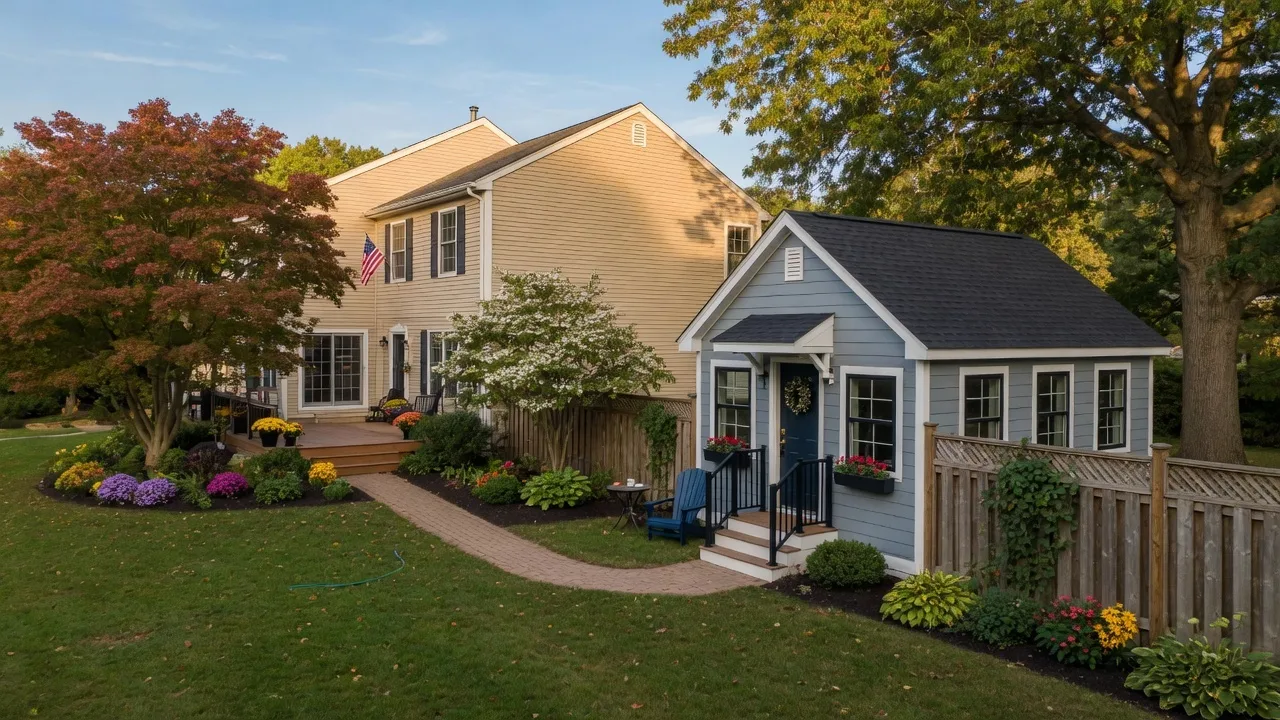
New Jersey homeowners could soon have a new way to add rental income, housing for family members, or extra space to their properties if a proposed state bill becomes law. Senate Bill S1786, which advanced out of the Senate Community and Urban Affairs Committee on June 1, 2026, would require municipalities across the state to permit accessory dwelling units (ADUs) on lots zoned for single-family or two-family use.
For homeowners in Essex County where property values are high, housing demand is intense, and multigenerational living is increasingly common this bill could have significant implications. Here's what it proposes, where it stands, and what it could mean for homeowners and buyers in Bloomfield, West Orange, Montclair, and beyond.
What is an ADU?
An accessory dwelling unit is a secondary living space on the same lot as a primary home. ADUs can take several forms:
- Attached ADU a separate living area within the main house (like a converted basement or in-law suite with its own entrance).
- Detached ADU a standalone small structure in the backyard, sometimes called a "granny flat" or "backyard cottage."
- Garage conversion turning an existing detached garage into a livable unit.
ADUs have gained momentum nationwide as a way to increase housing supply without dramatically changing neighborhood character. They're smaller than full apartment buildings, they fit on existing residential lots, and they serve real needs aging parents who want to stay close to family, adult children who need affordable housing, or homeowners who want rental income to help cover a mortgage.
What does S1786 propose?
The bill would require all New Jersey municipalities to permit ADUs on lots currently zoned for single-family or two-family dwellings. Key provisions include:
- Mandatory allowance municipalities could not outright ban ADUs on qualifying lots, though they could establish reasonable design and size standards.
- No owner-occupancy requirement the bill does not require the property owner to live on-site, which opens the door for investors and non-owner-occupied ADUs.
- Limited to two per lot a primary residence plus one ADU (or, on a two-family lot, a total of two units).
- Setback and height standards ADUs must comply with existing lot setback requirements and cannot exceed the height of the primary structure.
The bill still needs to pass the full Senate, the Assembly, and be signed by Governor Sherrill before it becomes law. But its advancement out of committee is a significant step and municipalities should be preparing for the possibility.
How does this connect to Governor Sherrill's housing agenda?
S1786 fits into a broader statewide push to address New Jersey's housing affordability crisis. Governor Sherrill signed Executive Order No. 17 on April 27, 2026, establishing an interagency Housing Governing Council tasked with accelerating housing production across the state. In June 2026, the administration announced additional measures including a Permitting Dashboard Pilot, regulatory changes to allow private inspection agencies, and the Design Professional Self-Certification Act all aimed at reducing barriers to housing construction.
ADUs are a natural part of this conversation. They don't require large-scale rezoning, they don't transform neighborhood character, and they add housing supply in places where people already want to live. For Essex County towns facing pressure from both affordability mandates and market demand, ADUs could become an important tool.
Where do Essex County towns stand on ADUs right now?
ADU rules vary significantly across Essex County:
- Montclair has been ahead of the curve. The Township Council introduced updates to its ADU ordinance in March 2025, allowing ADUs up to 30 feet in height larger than the previous 2023 regulation. Montclair has generally been supportive of increasing housing options.
- Bloomfield currently has standard zoning restrictions that limit most residential lots to a single dwelling unit. If S1786 passes, Bloomfield would need to amend its zoning to allow ADUs on qualifying lots.
- West Orange faces its own housing dynamics, including a state-mandated obligation to build or rehabilitate 1,069 affordable housing units by 2035. ADUs could help the township meet a portion of that obligation while giving homeowners a way to add value.
If the bill passes statewide, towns that have already embraced ADUs like Montclair will be ahead of the curve. Towns that haven't will need to update their zoning codes, which could be a process.
What this means for homeowners
If you own a home in Essex County, S1786 is worth paying attention to even if you're not planning to build an ADU yourself. Here's why:
Potential rental income
An ADU can generate significant rental income in a market like Essex County, where demand for housing is high and rents are climbing. For homeowners looking to offset mortgage costs or build wealth through real estate, an ADU on an existing property is a lower-barrier entry point than buying a second property.
Multigenerational housing
Many of my clients are thinking about how to accommodate aging parents or adult children. An ADU provides a way to keep family close while maintaining privacy for both households. In a market where assisted living costs are high and starter homes are hard to find, this option has real appeal.
Property value impact
Research from other states that have liberalized ADU rules suggests that allowing ADUs tends to have a neutral-to-positive effect on surrounding property values. The units are small, they're on existing lots, and they add housing without dramatically changing neighborhood character. In high-demand areas like Essex County, the additional housing supply could help ease pricing pressure which benefits buyers while the income potential benefits existing owners.
What to watch for
If S1786 passes, municipalities will have some discretion over design standards, parking requirements, and permitting processes. Those details matter. A well-designed ADU ordinance can ensure quality construction and neighborhood compatibility. A poorly designed one can create complications. It's worth paying attention to how your town implements the requirements.
What this means for buyers
If you're buying a home in Essex County, the potential passage of S1786 adds another dimension to your decision. A property with a suitable lot for an future ADU could offer long-term value whether you want to add rental income, create space for family, or simply have the option down the road.
It's also worth noting that the bill could increase demand for properties with existing ADUs or suitable lots, which could put upward pressure on pricing for those properties specifically. If you're considering a purchase and ADU potential matters to you, it's worth discussing with your agent early in the process.
The bottom line
S1786 is not yet law, but it represents a clear direction of travel for housing policy in New Jersey. The combination of the ADU bill, Governor Sherrill's housing executive order, and ongoing affordable housing mandates means that Essex County municipalities will likely be adding more housing options in the coming years and ADUs are one of the most homeowner-friendly ways to do that.
If you have questions about how this might affect your property or a home you're considering buying, I'm happy to talk through it. These are the kinds of policy changes that are easy to overlook but can have a real impact on your investment.
Sources
This story is based on reporting by the New Jersey Legislature (S1786), Governor's Office (Executive Order 17), Rutgers Policy Lab, and Montclair Local (June–July 2026).
Have a tip about local development?
I cover local real estate and development news across Bloomfield, West Orange, Montclair, and Essex County. If you hear about new construction, zoning changes, or neighborhood issues, I'd love to hear about it.