What Bloomfield & West Orange Sellers Actually Keep: Capital Gains, the NJ Exit Tax, and Your Net Proceeds
By Sorelle Crooks, Realtor® | Real Broker LLC | NJ License #2185837
Published October 13, 2026
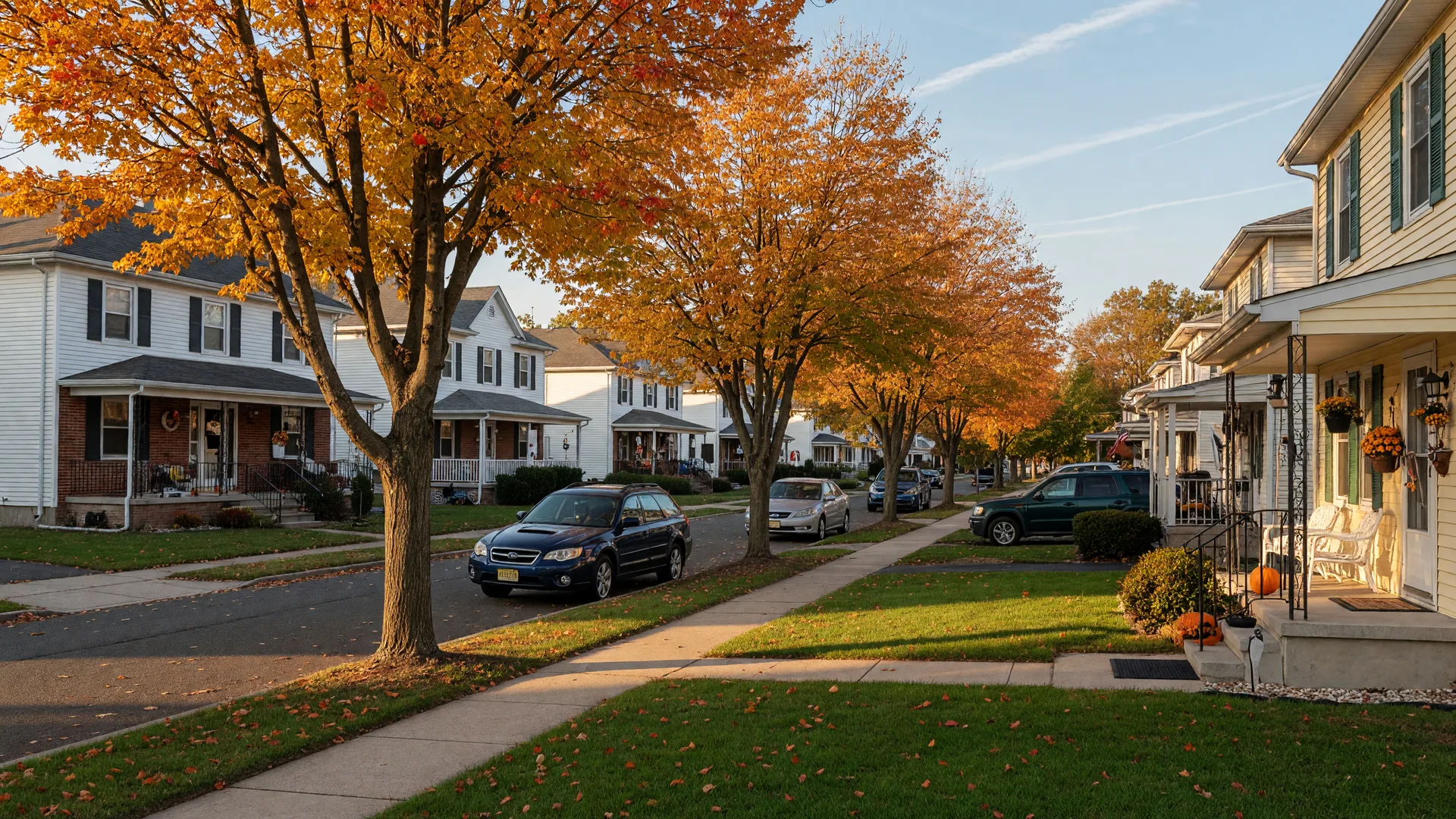
After "what is my home worth?" the question every seller asks is "what will I actually keep?" The honest answer for Bloomfield and West Orange homeowners is usually better than they expect, because the federal home-sale exclusion covers most Essex County gains, and New Jersey's so-called exit tax is a refundable withholding, not an extra tax on leaving. This guide walks through the actual numbers with the October 2026 market: well-priced homes still close about 6 to 12 percent over list in Bloomfield and 7 to 9 percent over list in West Orange, and a turnkey single-family still starts around $625K in Bloomfield and $600K in West Orange.
I am not a tax professional, and this is not tax advice. What I can do is explain how the rules work in plain language, show you the realistic ranges for these two towns, and tell you exactly which questions to bring to your CPA before you list. Every situation is different, and the tax side of a sale is one place where knowing the rules ahead of time genuinely pays.
- 1.The federal exclusion is generous. Up to $250K of gain is tax-free for a single filer, $500K for married couples, if you lived in the home 2 of the last 5 years. Most Bloomfield and West Orange sales fall entirely under it.
- 2.NJ's "exit tax" is a withholding, not a tax on leaving. Nonresident sellers prepay the greater of 10.75% of the gain or 2% of the sale price at closing, and get a refund if they overpaid.
- 3.Residents at closing have nothing withheld. You file a residency certification and settle up on your NJ return instead.
- 4.The over-asking premium is mostly yours. Because the exclusion covers the gain, every extra dollar of sale price, and pricing strategy is the highest-leverage move you control.
The good news first: the federal home-sale exclusion
Under federal law, most homeowners do not pay capital gains tax on the sale of their primary home. The rule, known as Section 121, lets a single filer exclude up to $250,000 of gain and a married couple filing jointly exclude up to $500,000, as long as you owned and lived in the home as your main residence for at least 2 of the 5 years before the sale. You also cannot have used the exclusion on another home sale within the prior 2 years.
The One Big Beautiful Bill Act, signed in July 2025, did not change this exclusion. The $250K and $500K limits are exactly what they have been since 1997, and they remain in place for 2026. That matters for Essex County sellers, because the typical gain in these towns sits well inside the limits.
Here is what that looks like with real October 2026 numbers. A Bloomfield homeowner who bought at $450K and sells at $700K has a $250K gain, which is fully excluded for a single filer and leaves a married couple another $250K of room. A West Orange homeowner who bought at $500K and sells at $750K has the same $250K gain, fully excluded. Even with the over-asking premiums these towns are known for, the gain on most primary-home sales stays under the federal limits, which means the sale is tax-free at the federal level.
When you do owe federal capital gains
The exclusion covers gain up to the limit, and only the gain above it is taxed. If your gain exceeds $250K or $500K, the excess is taxed at long-term capital gains rates, which in 2026 are 0, 15, or 20 percent depending on your income, plus possibly the 3.8 percent Net Investment Income Tax for higher earners.
Two practical points make this less scary than it sounds. First, your gain is the sale price minus your cost basis, and your cost basis includes what you paid plus the cost of qualifying improvements over the years, not just routine maintenance. New roof, new HVAC, a finished basement, those add to your basis and shrink your taxable gain. Second, you owe nothing until the gain clears the exclusion, so in Bloomfield and West Orange the realistic scenario where federal tax appears is a home bought decades ago that has appreciated well past the limits, or a seller who moved frequently and no longer qualifies for the 2-of-5-years test.
The record-keeping takeaway: keep your closing statement from when you bought, plus receipts for major improvements. If you ever need to prove your basis, those documents are the proof, and most sellers do not have them handy.
The NJ "exit tax" explained: a withholding, not a tax on leaving
This is the part that scares more sellers than anything else, and it deserves a calm explanation. New Jersey does not charge an extra tax for leaving the state. What people call the exit tax is a mandatory withholding on the sale of New Jersey real property when the seller is a nonresident at closing. The county clerk will not record the deed without the state's GIT/REP paperwork, so the title company or attorney handles it as part of the closing.
For a nonresident seller, the amount withheld is the greater of two numbers: 10.75 percent of the gain on the sale, or 2 percent of the total sale price. The 2 percent floor matters, because it applies even if there is no gain at all. And the withholding applies to anyone who is a nonresident at closing, including a former New Jersey resident who moved out of state before the deed transferred.
If you are still a New Jersey resident on the day of closing, the math is different and much simpler: nothing is withheld. You file a seller's residency certification, and any tax you owe is settled on your regular New Jersey return. The withholding only kicks in for nonresidents.
Here is the most important part: the withholding is a prepayment, not a final bill. If the federal exclusion means you owe New Jersey less than what was withheld, or nothing at all, you claim the difference back when you file your New Jersey return. Sellers who do not realize this sometimes think the money is gone. It is not, it is held, and the refund process is routine. I wrote a fuller walkthrough of the forms and exemptions on my NJ exit tax guide.
The two rules to remember
- Resident at closing: no withholding. You file a residency certification and settle on your NJ return.
- Nonresident at closing: the greater of 10.75% of the gain or 2% of the sale price is withheld, and it is refundable if you overpaid.
What this means for Bloomfield and West Orange sellers
Put the pieces together and the picture is genuinely good for most sellers in these two towns. The federal exclusion makes the gain on a typical primary-home sale tax-free, and the NJ withholding, when it applies at all, is a prepayment you can recover. The number that actually drives what you keep is the sale price, and that is where the October 2026 market is working in your favor.
Bloomfield 07003, October 2026
- Median sale price: about $619K on Redfin's rolling data, with RealtyTrac's September median near $683K, up about 5.5% year over year
- Sale-to-list: well-priced homes close roughly 6% to 12% above list, about 106% to 112% of asking
- Competition: about seven offers per well-priced listing, with hot sections running well above the ZIP average
- Realistic single-family floor: $625K+ in good condition
West Orange 07052, October 2026
- Median sale price: about $656K to $659K across recent reads, with Zillow's average home value near $702K
- Sale-to-list: well-priced homes close about 7% to 9% above list, and recent individual sales have run 10% to 11% over
- Competition: about six offers per listing, most homes pending in about 17 to 25 days
- Realistic single-family floor: $600K+ in good condition
For context, Montclair starts around $900K for a turnkey single-family and can reach into the millions in Upper Montclair. The tax math there is the same, the dollar figures are just bigger, and the exclusion still covers most primary-home gains.
Pricing heads-up: Well-priced homes across these Essex County towns routinely attract multiple offers and close above list. Mid-October 2026 reads: Bloomfield (07003) median sale price ~$619K (RealtyTrac September read nearer ~$683K), homes selling ~6-12% above list on average (single-family in good condition from ~$625K); West Orange (07052) median ~$656K, homes selling ~6-9% above list on average (single-family in good condition from ~$600K); Montclair (07042) median ~$1.2M-$1.3M, homes selling ~20-25% above list on average (single-family in good condition from ~$900K, into the millions in Upper Montclair). Inventory is limited in each ZIP, so prepared buyers who budget for the sale price rather than the list price are best positioned. Every situation is different. Let's talk through what the latest numbers mean for yours.
Why pricing strategy is your highest-leverage tax move
Here is the connection most sellers never make: because the federal exclusion covers the gain on a typical sale, almost every extra dollar of sale price is yours to keep. There is no tax bracket waiting to take a big cut of the over-asking premium, because the premium usually lands inside the exclusion. That makes the list-low-sell-high dynamic more valuable, not less.
In Essex County, list prices are strategy, not value. A Bloomfield home that is really worth $650K may list at $599K on purpose, because a buyer searching up to $600K sees it, a buyer searching up to $650K sees it too, and the wider the first-weekend pool, the more offers, and the higher the final price. That is why the sale-to-list ratios in these towns run so hot, and it is why a well-priced, well-presented home still closes 6 to 12 percent over list in Bloomfield and 7 to 9 percent over list in West Orange.
The strategy only works when three things are true: the list price is anchored to realistic comps, the home shows well enough to earn the attention, and the strategy price leaves room for the appraisal to confirm the final number, which matters with mortgage rates above 7 percent. When it works, the payoff is real. A Bloomfield home that closes at $700K instead of $660K puts roughly $40K more in your pocket, and for most sellers that difference is tax-free.
What to do now, in order
1 Get the real number for your home
The sale price drives everything downstream, so it comes first. I pull closed comps from within a quarter mile of your home and walk you through what they mean for your specific property. It is free, takes about thirty minutes, and there is no pressure to list.
2 Gather your records
Find your purchase closing statement and receipts for major improvements. They establish your cost basis, which is the number the whole gain calculation starts from.
3 Talk to a CPA before you list, especially if you are moving out of state
If you will be a nonresident at closing, the 2 percent floor or the 10.75 percent of gain withholding will show up in your closing statement, and you want to know it is coming and that it is refundable. A quick call with a tax professional settles the specifics for your situation.
4 Price the strategy, not the guess
List low or list at value? In hot sections with solid comps, listing just under the round number buyers filter by pulls in the widest pool and frequently produces seven or more offers in Bloomfield, six or more in West Orange. For unique homes and fixers, listing near realistic value is often the calmer, higher-net choice. I walk through the full decision in my list low or list at value guide.
A note on the closing math: beyond taxes, sellers in New Jersey pay the agent commission, an attorney (required in NJ), the real estate transfer tax, and title and settlement costs. I break down the realistic ranges and walk through dollar-for-dollar scenarios in my net proceeds guide, so you know what to expect before you ever see a closing statement.
The short version: most Bloomfield and West Orange sellers keep more than they expect, because the federal $250K/$500K exclusion covers the gain on a typical sale, and NJ's exit tax is a refundable withholding, not a tax on leaving. A turnkey single-family still sells from $625K+ in Bloomfield and $600K+ in West Orange, well-priced homes still close 6 to 12 percent over list, and the over-asking premium is mostly yours. The list price is strategy, the sale price is the number that matters, and the tax rules are on your side. Let's talk through your specific home, no pressure, no obligation.
Want your home's real number?
I pull closed comps from within a quarter mile of your home, walk you through what they mean for your specific property, and flag the questions worth bringing to your CPA. It is free, takes about thirty minutes, and there is no pressure to list. Every situation is different, and your street deserves its own analysis, not a town-wide average.
You Might Also Like