Condo vs Townhouse vs Single-Family Home: What NYC Relocators Should Know in Essex County NJ
By Sorelle Crooks, Realtor® | Real Broker LLC | NJ License #2185837
Published July 30, 2026
When you're moving from NYC to Essex County, one of the first decisions you'll face is what kind of home you actually want. In the city, the choice is usually straightforward: apartment or condo. But once you cross the Hudson into Bloomfield, West Orange, or Montclair, you suddenly have options that may not be familiar.
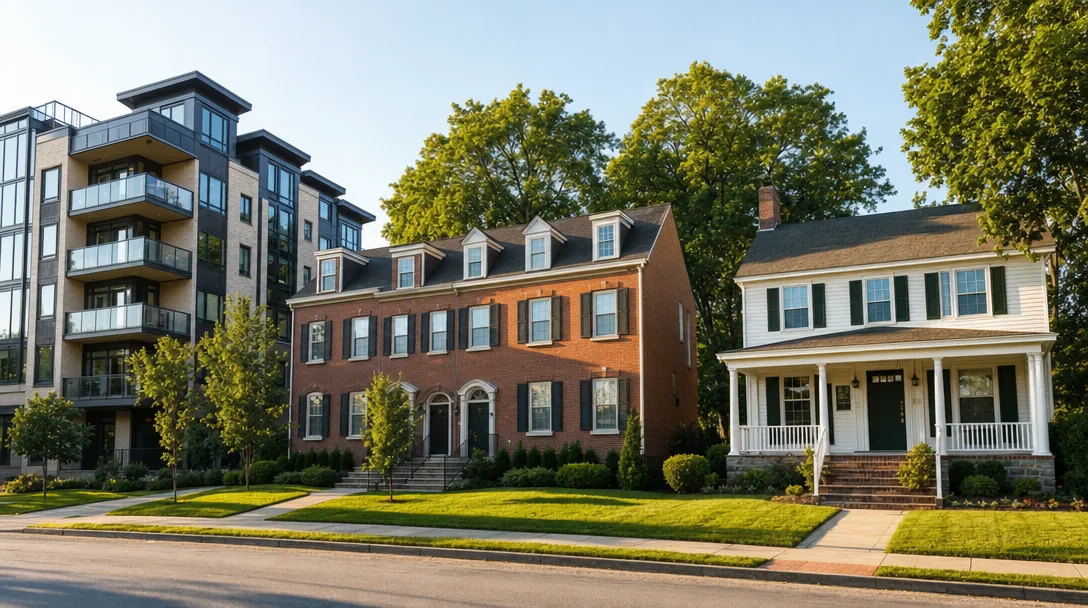
Condos, townhouses, and single-family homes each come with different trade-offs in price, maintenance, space, and lifestyle. The right choice depends on what matters most to you. I want to walk through each option honestly, so you can figure out which one fits your situation best.
- Condos in Essex County range from $250K to $500K+, with HOA fees from $200 to $600/month. Least maintenance, best for first-time buyers or part-time residents.
- Townhouses run $400K to $700K in Bloomfield and West Orange, often with private entrances and small yards. A middle ground between condo convenience and house space.
- Single-family homes start around $625K in Bloomfield, $600K+ in West Orange, and $900K+ in Montclair. Full control, full responsibility, and the most space.
Condos: The Low-Maintenance Entry Point
If you're used to apartment living in NYC, a condo is probably the most familiar transition. You own your unit, share common areas with other residents, and pay a monthly common charge or homeowners association fee that covers building maintenance, landscaping, insurance, and often utilities like water and trash.
In Essex County, condos are most common in downtown Montclair, around Bloomfield Center, and in established complexes throughout West Orange. Prices range widely. A one-bedroom condo in Montclair might list around $250,000 to $350,000, while a two-bedroom in a newer Bloomfield building could run $400,000 or more. HOA fees typically land between $200 and $600 per month, depending on amenities like pools, fitness centers, or doormen.
The upside is straightforward. You don't mow the lawn. You don't shovel snow. You don't worry about roof repairs or exterior painting. If you're a busy professional, a frequent traveler, or someone who simply doesn't want to spend weekends on home maintenance, a condo can be a great fit.
The trade-off is less control. The HOA board decides when to raise fees, what exterior changes are allowed, and how reserve funds are spent. Special assessments for big projects like a new roof or elevator repair can run thousands of dollars above your regular fees. And in a competitive market like Essex County, condos don't always appreciate as quickly as single-family homes.
For NYC relocators who want to own without taking on the full weight of homeownership, condos are worth a serious look. You get equity, tax benefits, and a foothold in the market, without having to learn how to fix a garbage disposal on day one.
Townhouses: The In-Between That Often Wins
Townhouses are the option that surprises a lot of NYC buyers. They look like houses from the outside, attached to one or two neighbors, with their own entrance, usually a small private yard or patio, and often a garage or driveway. But they function more like condos in terms of ownership: you own the structure and the land it sits on, but you may be part of a homeowners association that handles common areas.
In Bloomfield and West Orange, townhouses in the $450,000 to $650,000 range are some of the most popular options for relocating families and professionals. You get two or three bedrooms, sometimes a basement or loft, and enough space to actually spread out. Monthly HOA fees are generally lower than condo fees, often $150 to $350, because you're responsible for your own exterior maintenance.
The real appeal of a townhouse is that it feels like a house without feeling like a project. You have your own front door. You can park in your own garage. You might have a tiny backyard where you can grill or let a dog out. But you're not responsible for the entire property the way you would be with a single-family home. Many townhouse communities handle snow removal and landscaping for common areas, which means less work for you.
The catch is that you're attached to neighbors. Sound travels more than you'd expect, and shared walls mean shared noise sometimes. Parking can be tight in older townhouse communities. And resale can be slower if your complex develops a reputation for high fees or poor management.
For the right buyer though, a townhouse hits the sweet spot. You get the space and privacy of a home with a maintenance load that's manageable for someone who works full time.
Single-Family Homes: The Most Space, The Most Responsibility
This is what most people picture when they think "suburban New Jersey." A detached house on its own lot, with a front yard, a backyard, a driveway, and complete control over everything inside and out. In Essex County, single-family homes come in every style imaginable: Colonial Revivals, Cape Cods, Tudors, mid-century ranches, and newer construction.
The price of entry is real but the value is undeniable. In Bloomfield, a well-maintained three-bedroom single-family home typically sells for $625,000 or more often well above list price in the current market. West Orange starts around $600,000 for a fixer-upper and climbs quickly for move-in-ready homes in desirable neighborhoods like Northfield or Pleasantdale. Montclair, the most expensive of the three, starts around $900,000 and regularly reaches $1.2 million or more for homes in great condition near the train stations or downtown.
The big difference compared to condos and townhouses is that you own the land. That means you benefit from appreciation on both the structure and the lot, which historically has been the strongest long-term investment in real estate. It also means you're responsible for everything: the roof, the furnace, the foundation, the lawn, the trees, the driveway, the gutters, the pests. All of it.
For NYC transplants, the adjustment to single-family homeownership can be jarring. You go from calling a super to fix a leaky faucet to calling a plumber yourself, paying for it yourself, and waiting for the appointment yourself. The learning curve is real.
But the payoff is equally real. A backyard for kids or dogs. A basement workshop or home gym. A garage that doubles as storage. The ability to paint walls any color, renovate the kitchen, plant a garden, or build a deck without asking anyone's permission. For many buyers, especially move-up families and long-term owners, that autonomy makes the responsibility worth it.
How to Decide: A Practical Framework
Here's how I help my clients think through the choice. Ask yourself these three questions:
How much time do you want to spend on home maintenance?
Be honest with yourself. If you've never owned a home before, you might not know what you don't know. A condo means almost zero exterior maintenance. A townhouse means some maintenance but less than a full house. A single-family home means a lot. There's no wrong answer, but the wrong choice for your lifestyle will leave you stressed and resentful.
How long do you plan to stay?
If you're planning to stay five years or less, a condo or townhouse may make more financial sense. They're generally easier to sell and require less upfront investment in maintenance. If you're planning to stay seven to ten years or more, a single-family home on a good lot in a strong school district is hard to beat for long-term appreciation.
What does your monthly budget actually look like?
When comparing options, don't just look at the mortgage payment. Factor in property taxes (which vary significantly by town and property type in NJ), HOA fees, homeowners insurance (more expensive for single-family homes), maintenance reserves (budget 1-2% of the home's value annually for a house), and utilities (bigger homes cost more to heat and cool). I walk every client through this comparison with real numbers before we start touring.
Real Pricing in Today's Essex County Market
To give you a concrete sense of what you're looking at in mid-2026, here are the rough ranges I'm seeing across Bloomfield, West Orange, and Montclair. These are ballpark numbers and every property is different, but they reflect what active buyers are actually paying.
- Bloomfield: Condos from $250K to $400K, townhouses from $400K to $550K, single-family homes from $625K to $800K+
- West Orange: Condos from $300K to $500K, townhouses from $450K to $650K, single-family homes from $600K to $950K+
- Montclair: Condos from $300K to $600K, townhouses from $500K to $800K, single-family homes from $900K to $1.5M+
And remember, homes in Essex County routinely sell above asking price. A Bloomfield single-family home listed at $625K might sell for $650K or more. A West Orange townhouse listed at $500K could go for $530K. Your budget needs to account for that gap. I wrote more about this dynamic in my post on what $600K gets you in Essex County.
A Note for First-Time Buyers
If this is your first home purchase and you're coming from a rental in NYC, I usually recommend starting with a condo or townhouse unless you're confident you want the full single-family experience. The maintenance learning curve is gentler, the monthly costs are more predictable, and you can always move up to a house later once you know what you're doing.
That said, plenty of first-time buyers jump straight into a single-family home and love it. The key is going in with eyes open. I've seen too many buyers underestimate the cost and time commitment of maintaining a house and end up feeling underwater six months after closing. I'd rather you start with something manageable and upgrade later than stretch too far and regret it.
For a deeper look at what to watch for, check out my guide on first-time homebuyer mistakes in Essex County and my breakdown of renting vs buying in Bloomfield.
Let's talk through your options.
Whether you're looking at condos, townhouses, or single-family homes in Bloomfield, West Orange, or Montclair, I'll walk you through the pros and cons with honest advice. No pressure, just practical guidance based on what you actually need.
The Bottom Line
There's no single right answer when it comes to choosing between a condo, townhouse, or single-family home in Essex County. The right choice depends on your budget, your lifestyle, and what you're looking for in the long run. What matters is understanding the trade-offs before you commit.
I help NYC relocators navigate this decision every day. If you're trying to figure out which path makes sense for your situation, I'd love to talk through it. Schedule a time to chat and I'll give you my honest take no pitch, just practical advice.
Talk soon,
Sorelle
You Might Also Like
Not sure which home type fits your lifestyle? Let's figure it out together.