Essex County's Property Tax Revaluation Is Coming: What Homeowners and Buyers in Bloomfield, West Orange & Montclair Should Know
By Sorelle Crooks, Realtor® | Real Broker LLC | NJ License #2185837
Published October 15, 2026 · Last updated October 15, 2026
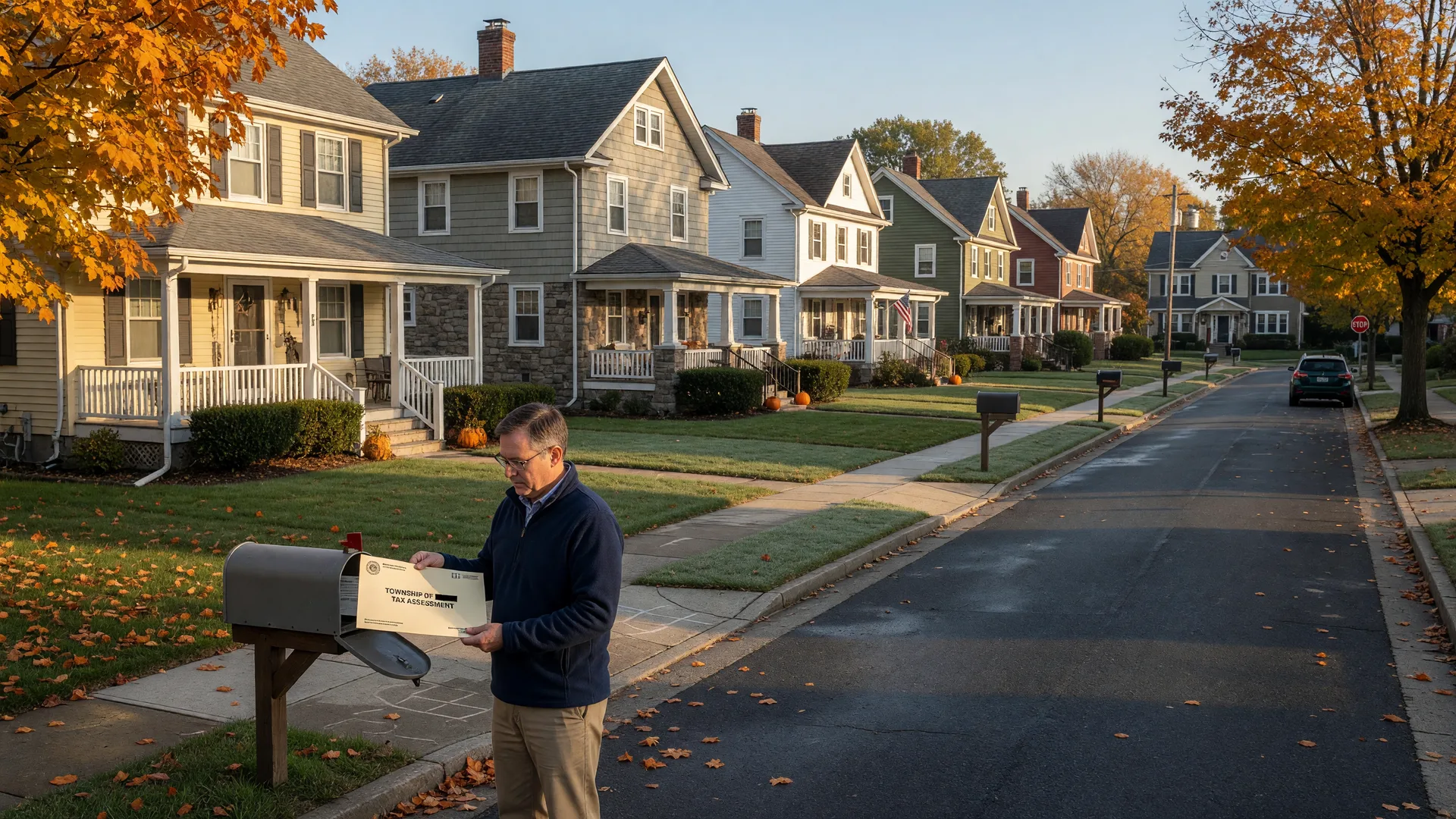
If you own a home in Montclair, a revaluation notice with a new assessment is on its way, because Essex County has ordered the town's first townwide revaluation since 2018, with property inspections already underway this fall and new values taking effect for the 2028 tax year. Bloomfield is scheduled for the same 2028 revaluation, while West Orange homeowners went through their reassessment back in 2025. The honest summary up front: a revaluation does not automatically raise your tax bill, but it does reset every assessment to market value, and that can shift who pays more and who pays less.
I get a lot of questions about this right now, and I want you to feel informed and comfortable, not worried. Let me walk through what a revaluation actually is, which towns are affected, what it means for your taxes, and what buyers should keep in mind when they are budgeting for a home in Essex County.
- 1.Montclair's revaluation is happening now. Ordered by the county, it must be completed by October 1, 2027, covers roughly 11,000 parcels, and is the town's first since 2018. Inspections started this fall, with assessment notices expected in late 2027 for the 2028 tax year.
- 2.Bloomfield is scheduled for 2028, West Orange already revalued in 2025. A revaluation resets assessments to market value; it does not by itself raise the total the town collects, but it does redistribute who pays.
- 3.Buyers should budget for taxes on the sale price, not the old assessment. In towns where assessed values have trailed the market, a revaluation brings them back in line, which matters for your monthly payment.
What a revaluation actually is
A revaluation is when a town resets every property assessment to current market value. Over time, assessments drift out of line with what homes actually sell for, which is why New Jersey towns are required to revalue periodically. The Essex County Board of Taxation runs a rolling countywide schedule so that towns don't all fall behind at once.
Here is the part that trips people up: a revaluation is not designed to raise the total amount of property tax collected. The town's budget sets how much it needs, and the tax rate is adjusted so the total levy does not automatically jump. What changes is the distribution. Homes whose value rose faster than their neighbors take on a larger share of the burden, while homes that appreciated less can see their share shrink. In plain English: some bills go up, some go down, and most land somewhere in the middle.
The Essex County revaluation schedule through 2029
According to the Essex County Board of Taxation, here is how the rolling schedule shapes up:
Revaluation schedule, per the Essex County Board of Taxation
- 2026: Cedar Grove, Glen Ridge, Verona
- 2027: Caldwell, Fairfield, Newark, West Caldwell
- 2028: Belleville, Bloomfield, Montclair (Montclair's first since 2018, roughly 11,000 parcels)
- 2029: Essex Fells, Millburn, North Caldwell
- Already done: West Orange revalued for the 2025 tax year, its first since 2011
West Orange is the one town of the three I cover most that has already been through this, so its homeowners now have assessments sitting much closer to market. Montclair and Bloomfield are the ones to watch, because their assessed values have trailed the run-up in home prices for years. Montclair's Chapter 123 ratio has been running around 56 percent, which is a technical way of saying assessed values have been sitting well below market value.
What Montclair homeowners should expect next
The county formally ordered Montclair's revaluation, and per county action reported in October 2026 it must be completed by October 1, 2027, funded by a roughly $2 million emergency appropriation. Property inspections are underway this fall, which means you may see assessors and appraisers walking through your neighborhood, measuring exteriors and, in some cases, scheduling interior inspections. Every assessment in town will change.
Assessment-change notices are expected to go out in late 2027, and the new values take effect for the 2028 tax year. That timing matters: you will get a lot of lead time before the new numbers land on a bill, which gives homeowners room to review their new assessment against comparable sales and file an appeal if something looks off. The annual appeal deadline is typically April 1, or May 1 in revaluation years, so mark the calendar when your notice arrives. My full guide to how NJ property taxes work and how to dispute an assessment walks through the appeal process step by step.
What revaluation means for buyers
If you are buying in Montclair or Bloomfield before the revaluation lands, here is the honest advice: budget your property taxes on the sale price, not on the seller's current assessment. In a town where assessments trail the market, the new owner's taxes often step up to reflect the real purchase price anyway, and a revaluation makes that adjustment official for everyone at once.
The practical move is to ask your agent and lender for a tax estimate based on the sale price, then stress-test your monthly payment a little higher. I always encourage buyers to build in that cushion rather than assume today's tax bill will carry over. For context on the actual entry points right now: a turnkey single-family realistically starts around $625K in Bloomfield, $600K in West Orange, and $900K in Montclair, and well-priced homes in each town routinely sell over asking. If you are weighing whether to buy now or wait, my guide to what Montclair's 2026-27 school budget means for relocating families covers the other big piece of the local tax picture, since school levies make up the largest share of most NJ bills.
Pricing heads-up: Well-priced homes across these Essex County towns routinely attract multiple offers and close above list. Mid-October 2026 reads: Bloomfield (07003) median sale price ~$619K (RealtyTrac September read nearer ~$683K), homes selling ~6-12% above list on average (single-family in good condition from ~$625K); West Orange (07052) median ~$656K, homes selling ~6-9% above list on average (single-family in good condition from ~$600K); Montclair (07042) median ~$1.2M-$1.3M, homes selling ~20-25% above list on average (single-family in good condition from ~$900K, into the millions in Upper Montclair). Inventory is limited in each ZIP, so prepared buyers who budget for the sale price rather than the list price are best positioned. Every situation is different. Let's talk through what the latest numbers mean for yours.
The honest bottom line
A revaluation is not a tax increase by itself, and it is not something to fear. It is a reset that brings assessments in line with what homes are actually worth, and in a market like this one it mostly means your assessed value finally catches up with the price your neighbors' homes are selling for. For sellers, a revaluation that tracks the market can actually make your sale cleaner, because the assessed value and the contract price are more consistent, and there is less of a gap to reconcile at closing.
Whether you are a homeowner waiting for your assessment notice or a buyer trying to budget realistically for Essex County, I am happy to talk through what the numbers mean for your specific situation. Every situation is different, and walking through the pros and cons together is how you make a decision you feel good about.
Talk soon,
Sorelle
Keep Reading
Not sure how a revaluation affects your plans? Let's talk through your numbers, no pressure.