Fall 2026 Home Maintenance Checklist: A Guide for First-Time Homeowners in Essex County NJ
By Sorelle Crooks, Realtor® | Real Broker LLC | NJ License #2185837
Published July 30, 2026
If you bought your first home this year in Bloomfield, West Orange, or Montclair, congratulations. You did it. You navigated Essex County's competitive market, won your offer, and closed on a place that's yours. But if you spent your whole adult life renting in NYC, there's something coming that you may not have thought about yet: fall home maintenance.
In an apartment, fall meant turning the radiator on for the first time and maybe checking that the window AC unit didn't drip onto the fire escape. In a house, it's a different story. Northern New Jersey winters can be cold and snowy, and the homes here built from the 1920s through the 1970s need attention before the temperature drops. A little preventive work in September and October can save you from expensive emergency repairs in January.
Here's a practical fall home maintenance checklist written for first-time homeowners, especially those coming from city apartments. I've organized it from most important to least, so you can prioritize what matters.
1. Clean Your Gutters and Downspouts
This is the single most important fall maintenance task, and it's the one that first-time homeowners most often overlook. Gutters clogged with leaves and debris can't channel water away from your roof and foundation. When water backs up, it can seep into your basement, damage your siding, or cause ice dams in winter that lead to roof leaks.
In Essex County, where many homes are surrounded by mature oak and maple trees, gutters fill up fast in October and November. If your home has trees overhanging the roof, you may need to clean gutters twice during the fall season.
Pro tip: If you're not comfortable on a ladder, hire a local gutter cleaning service. It usually costs $100 to $250 for a standard single-family home in Bloomfield or West Orange, and it's worth every penny compared to a basement flood. If you do it yourself, use a sturdy ladder, wear gloves, and have a spotter hold the ladder steady.
2. Service Your Heating System
Call an HVAC professional to service your furnace or boiler before you need to turn it on full time. A fall tune-up typically costs $150 to $300 and includes cleaning, inspection, and a check for carbon monoxide leaks. This is not optional. A neglected heating system can fail in the middle of a January cold snap, and emergency service calls in Northern New Jersey winter cost significantly more than a scheduled appointment.
If you have a forced-air system, change the air filter now and plan to change it every three months. If you have radiators, bleed them to release trapped air so they heat evenly. If you have a boiler, check the pressure gauge and make sure it's in the normal range.
Many homes in Essex County still have oil-fired boilers, especially older Colonials and Cape Cods. If that's you, make sure your oil tank is topped off before heating season starts, or better yet, sign up for automatic delivery with a local company. Running out of oil mid-winter is miserable and expensive to fix.
3. Check Your Roof and Attic
Walk around your house on a dry day and look at the roof from ground level. Use binoculars if you can. Check for missing, curled, or cracked shingles, which can let water in during fall rains and winter snow melts. Look at the flashing around chimneys, skylights, and vent pipes, those are the most common leak points.
Inside the attic, check for signs of moisture, daylight coming through the roof boards, or animal droppings. Squirrels and raccoons love attics, and they start looking for winter shelter in the fall. If you hear scratching or see droppings, call a wildlife removal service sooner rather than later.
Most roof issues are easier and cheaper to fix in September than in December. If your roof is approaching 20 years old, consider having a roofer give it a professional inspection.
4. Seal Drafts Around Windows and Doors
Older homes in Bloomfield, West Orange, and Montclair are charming, but they're often drafty. Walk around your house on a windy day and feel for cold air coming in around window frames, door edges, and baseboards. In most cases, the fix is simple and inexpensive.
Replace or add weatherstripping around doors. Apply caulk around window frames where the trim meets the wall. For single-pane windows (common in pre-war homes), consider removable window insulation film or heavy curtains. These small fixes can reduce your heating bill by 10 to 20 percent and make a noticeable difference in comfort.
If you're planning to replace old windows, fall is a good time to get quotes from local contractors before the spring rush.
5. Winterize Your Outdoor Spaces
This one is especially important for first-time homeowners who aren't used to managing outdoor property. Before the first freeze, disconnect and drain all garden hoses. If you have frost-proof outdoor spigots, leave them open for the winter. If you don't, shut off the water supply to outdoor faucets from inside the house and drain the line.
Bring in or cover any outdoor furniture, grills, and gardening tools. Store them in a garage, shed, or basement to protect them from snow and ice. If you have a lawn mower, drain the gas or add stabilizer for the winter.
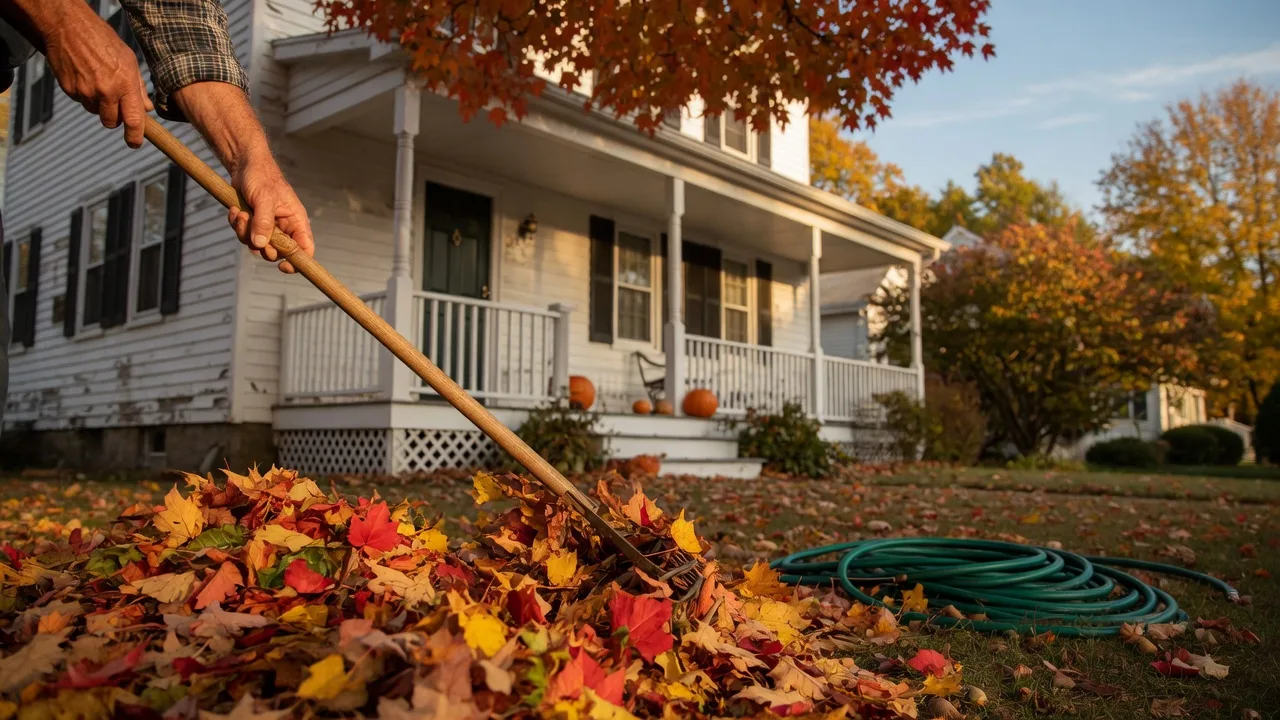
Rake leaves from your lawn and garden beds. Heavy leaf cover can smother grass and invite pests. Many Essex County towns offer curbside leaf pickup in October and November, check your town's schedule. Bloomfield and West Orange both publish collection dates online.
6. Test Smoke and Carbon Monoxide Detectors
Fall is a good time to test all your smoke alarms and carbon monoxide detectors, especially before you start running your heating system regularly. Replace batteries in any detector that uses them. Detectors more than 10 years old should be replaced entirely.
Carbon monoxide is a serious risk in New Jersey homes, especially those with gas furnaces, oil boilers, or attached garages. Every floor of your home should have a working CO detector, and you should have one within 15 feet of every bedroom. This is one of those things that seems like a small task but genuinely protects your family.
7. Inspect Your Chimney and Fireplace
If your home has a wood-burning fireplace, have the chimney cleaned and inspected before you light the first fire of the season. Creosote buildup is a leading cause of chimney fires, and a blocked flue can push smoke and carbon monoxide back into your home.
Even if you don't use your fireplace, have the chimney checked for blockages from leaves, animal nests, or crumbling brickwork. A chimney sweep in Essex County typically charges $200 to $400 for an inspection and cleaning.
8. Protect Your Pipes From Freezing
Pipes that run through uninsulated spaces like crawlspaces, basements, or exterior walls are vulnerable to freezing when temperatures drop into the teens. Insulate exposed pipes with foam pipe sleeves, which cost a few dollars at any hardware store. If you have a crawlspace, make sure the vents are closed for the winter.
Know where your main water shutoff valve is. If a pipe does burst in the middle of the night, you need to be able to turn the water off fast. If you haven't found it yet, locate it this weekend and make sure the valve works.
A Note About Older Homes in Essex County
Many homes in Bloomfield, West Orange, and Montclair were built before 1960. If your home falls into that category, pay extra attention to items like old furnace systems, single-pane windows, ungrounded electrical outlets, and potential lead paint concerns. These aren't dealbreakers, but they require regular attention.
For a deeper dive into the specific issues that come with buying an older New Jersey home, check out my earlier guide: What You May Not Know About Buying an Older Home in New Jersey. It covers underground oil tanks, knob-and-tube wiring, and other things every new homeowner should know.
When in Doubt, Ask
The biggest shift from renting to owning is that there's no super to call. But that doesn't mean you're on your own. Talk to your neighbors, many of them have owned their homes for years and know exactly which local plumber, roofer, or HVAC company to trust. Join a local community Facebook group or nextdoor for recommendations.
And if you need a referral, I'm always happy to share the contractors and service providers that my clients have used and trusted. Part of my job is helping clients after closing, not just before.
The Bottom Line
Fall maintenance doesn't have to be overwhelming. Start with the tasks that prevent the most expensive damage gutters, heating, roof, and drafts. Work through the rest as you have time. And remember: every first-time homeowner learns this stuff as they go. You don't need to know everything today. You just need to know what to do next.
If you bought your first home in Essex County this year and have questions about getting settled, I'd love to hear how it's going. I'm always here for my clients, even long after the closing papers are signed.
Talk soon,
Sorelle
You Might Also Like
I'm still here to help after closing.
Whether you need a contractor recommendation, want to talk about your next move, or just want to say hi, I'd love to hear from you. I don't disappear after the papers are signed.
Just bought your first home and feeling overwhelmed? I'm happy to help.