Livingston NJ Real Estate: What NYC Buyers Need to Know
- Median home price $750K–$1.3M+ depending on size and location, with spacious lots that are rare this close to NYC.
- Livingston Public Schools rank in the top 20% statewide – #20 Best Public High School in NJ (U.S. News).
- No train station in town, but Community Coach #77 offers a direct, single-seat ride to Port Authority in 50–60 minutes.
- Major corporate corridor along Route 10 – home to RWJBarnabas Health, Formosa Plastics, and other major employers.
By Sorelle Crooks, Realtor® | Real Broker LLC | NJ License #2185837
Published July 2026 · Last updated July 2026
If you're a NYC buyer looking at Livingston, NJ for the first time, you're probably trying to figure out what the market actually looks like, whether the commute works, and whether this spacious, family-focused township is the right fit. I work with buyers in this area regularly, and I'm going to give you the straightforward picture – no sugarcoating, no pressure.
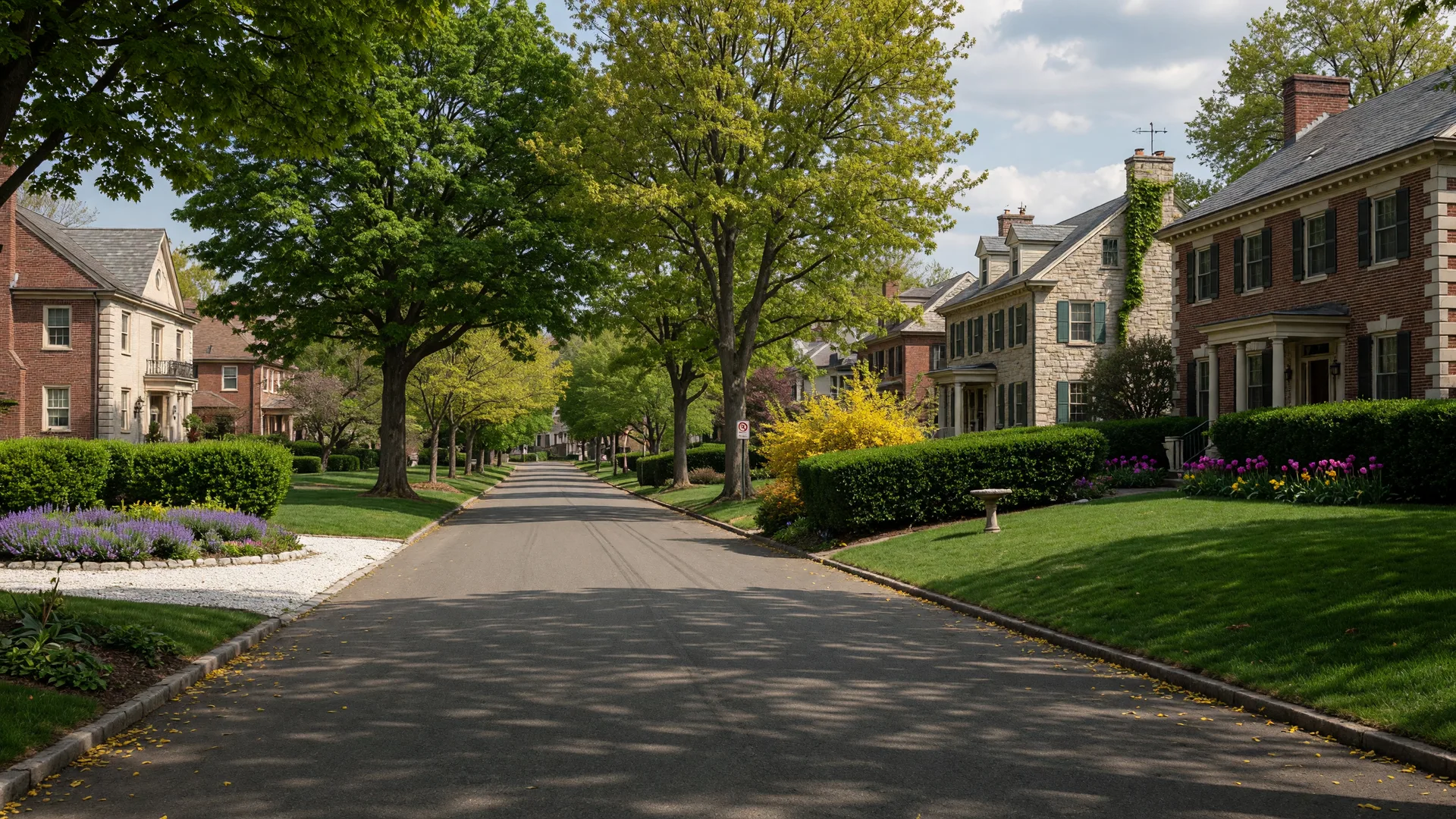
Livingston doesn't have the walkable downtown of Montclair or the gas-lamp charm of Glen Ridge. What it has is space – real space – on generous lots with mature trees, plus some of the best public schools in New Jersey. For families leaving NYC who want room to breathe, this township delivers.
The Current Market: Prices, Inventory, and Trends
As of mid-2026, home prices in Livingston span a wide range depending on size and location within the township. Homes start in the $750K range for smaller or older properties and climb well above $1.2M–$1.3M+ for larger colonials, expanded estates, and newer construction on premium lots.
Here's what the market looks like in practice:
- Entry-level homes: $650,000–$800,000 – typically older ranches, split-levels, or smaller colonials that may need updating. These are the most accessible entry points for buyers targeting Livingston.
- Single-family homes (the core market): $800,000–$1.2M – the sweet spot for most families. At this range, you're getting a three- to four-bedroom colonial or expanded Cape on a generous lot with a yard, driveway, and the kind of space that's hard to find this close to NYC.
- Executive estates and newer construction: $1.2M–$1.8M+ – larger homes on half-acre to full-acre lots, often with updated kitchens, multiple bathrooms, finished basements, and premium landscaping. These tend to move quickly when they hit the market.
The market is competitive but less frenzied than ultra-low-inventory towns like Glen Ridge. Homes that are well-priced and well-presented still sell within a few weeks, but buyers have slightly more room to negotiate compared to the peak bidding-war years. Average days on market is in the 23–39 day range, depending on the property and price point.
For NYC buyers, the value proposition is clear: at a $900K budget, you're getting a four-bedroom colonial on a half-acre lot in a top-ranked school district. In Manhattan, that same budget buys you a modest one-bedroom condo.
Pricing heads-up: In Essex County, homes routinely sell for above asking – the county-wide average is 112.4% of list price (Bergen+Essex Market Pulse, July 2026), the highest of any county in NJ. Bloomfield's Q2 median is ~$700K–$725K with a 113% sale-to-list ratio, averaging 7 offers per listing (17–35 days on market). West Orange's median is ~$660K–$700K (up 6.3% YoY) with 85% of homes selling over asking and a year-to-date over-asking premium of 10.7%. Montclair single-family homes range from ~$900K to well into the millions, with the most competitive sections seeing 126% sale-to-list ratios. The average buyer pays about $68,000 over asking on a $750K median. A turnkey 3-bed/2-bath in good condition in Bloomfield costs $625K+; in West Orange it costs $600K+. Budget for the sale price, not the list price.
What Types of Homes Are Available?
Livingston's housing stock is varied, but the emphasis is on space. The township covers roughly 14 square miles, which gives it one of the largest geographic footprints in Essex County – and that translates into bigger lots and more spread-out neighborhoods. Here's what you'll find:
- Colonials: The most common style – two-story homes with bedrooms upstairs and living spaces on the main floor. Many are grand, well-maintained, and set on spacious lots. This is the signature Livingston home.
- Split-levels and bi-levels: Popular in mid-century developments throughout the township. Many have been updated with modern kitchens and bathrooms. Good value for buyers who want space without the colonial price tag.
- Ranches: Single-story homes popular with downsizers and empty-nesters. Many have been expanded over the years. Typically in the $750K–$950K range.
- Expanded Capes and raised ranches: A versatile middle ground between ranches and colonials – often with finished basements and flexible layouts.
- Estate properties: Larger homes on premium half-acre to full-acre lots, often with custom features, pools, and professional landscaping. These are the executive-level homes that define Livingston's upper end.
What stands out about Livingston compared to nearby towns is the lot size. Many properties sit on half-acre or full-acre lots with mature trees, genuine backyard privacy, and space between neighbors. For anyone coming from a NYC apartment – or even from the denser neighborhoods of Montclair or Bloomfield – that kind of space is life-changing.
Schools: The Defining Asset
For many families, Livingston's public school system is the primary reason they choose this township – and the numbers back it up. The Livingston Public School District is one of the highest-rated in New Jersey:
- Livingston High School: Ranked #20 Best Public High School in New Jersey (U.S. News, 2025), ranked #418 nationally
- District testing scores: 10/10 average testing ranking (Public School Review, 2025–26) – top 20% statewide
- 9 public schools serving approximately 6,400 students, with strong STEM programs and Blue Ribbon recognition
- College placement: Exceptional college acceptance rates, with graduates regularly attending top universities
For families coming from NYC – where competitive school admissions, lottery systems, and $30,000–$50,000+ annual private school tuition are the norm – Livingston's public schools represent both a quality upgrade and a massive financial relief.
The Commute: Getting to NYC from Livingston
Let's be upfront about this: Livingston does not have a train station. That's the one practical downside compared to towns like Glen Ridge, Bloomfield, or Montclair. But the township has built a multi-layered transit system that works well for commuters who plan ahead.
Here's what the commute looks like:
- Community Coach #77: This is the most popular option. A comfortable motorcoach runs directly from the Livingston Mall to the Port Authority Bus Terminal in Midtown Manhattan. The ride takes 50–60 minutes, and it's a single-seat, direct trip – no transfers, no switching trains. Many commuters use this time to read, work, or decompress.
- Livingston Express Shuttle: A free municipal shuttle runs from the Livingston Mall (with free commuter parking in Section 18) to the South Orange Train Station. From there, you can catch NJ Transit's Midtown Direct trains into Penn Station. Total door-to-door time: roughly 60–75 minutes.
- Nearby train stations: Many Livingston residents also drive to nearby stations in Millburn, Short Hills, Summit, or South Orange – all offering NJ Transit Midtown Direct service to Penn Station.
- Driving: Midtown Manhattan is roughly 35–40 minutes off-peak and 55–65 minutes during rush hour via I-280 and the Lincoln Tunnel.
The commute is longer than from Glen Ridge or Bloomfield, and it requires more planning. But for families who prioritize space and schools over commute time, it's a trade-off that works. Many Livingston commuters find the express bus surprisingly comfortable and productive.
The Corporate Corridor: A Hidden Advantage
One thing that doesn't show up in most relocation guides is Livingston's position along Route 10 – one of Northern New Jersey's major corporate corridors. Several major employers are headquartered or have significant offices in or near Livingston, including:
- RWJBarnabas Health – one of New Jersey's largest healthcare systems
- Formosa Plastics – one of the largest chemical manufacturers in the region
- Major retail and corporate offices along the Route 10 corridor, including Target's regional presence and numerous professional services firms
For buyers who work in finance, healthcare, tech, or corporate services – and who may need to commute to an NJ office rather than Manhattan – Livingston's central location in Essex County puts you within easy reach of employers throughout Northern New Jersey. This is a genuine advantage for dual-income households where one partner commutes to NYC and the other works locally.
Buyer Tips Specific to Livingston
If you're seriously considering Livingston, here are some tips I share with every NYC buyer I work with:
- Test the commute before you buy. Take Community Coach #77 from the Livingston Mall to Port Authority during morning rush hour. See how it feels. For some people, the direct bus is a revelation – for others, the lack of a train station is a dealbreaker. Know which camp you're in.
- Understand the lot size premium. Livingston's larger lots are a major part of its appeal – but they also mean higher property taxes, more yard maintenance, and higher costs for snow removal, landscaping, and outdoor upkeep. Make sure you're ready for the full cost of homeownership on a half-acre lot.
- Pay attention to the school district boundaries. The township has nine public schools serving different neighborhoods. If school quality is your top priority, I'll help you understand which schools serve the specific areas you're considering.
- Don't skip the inspection. Many Livingston homes are 40–70 years old. While they're generally well-built, pay attention to roofs, HVAC systems, foundations, and any signs of water intrusion – especially in homes with lower-level living spaces.
- Budget for NJ property taxes. Livingston's property taxes run approximately 2.5–3.0% of assessed value. On an $850K home, that's roughly $21,000–$25,000 per year – or $1,750–$2,100 per month on top of your mortgage. This is a significant monthly cost you need to plan for.
- Be ready to move quickly on good properties. The best homes in Livingston – well-priced, well-maintained, in top school zones – don't sit long. Have your pre-approval ready and be prepared to make a decision within a day or two.
The Bottom Line
Livingston isn't the flashiest name in Essex County real estate. It doesn't have Montclair's buzz, Glen Ridge's historic charm, or Maplewood's artistic cachet. What it has is substance: genuinely spacious homes on real lots, nationally ranked public schools, a functional commute to NYC, and a family-focused community that prioritizes education and quality of life.
If you're an NYC buyer who values space, schools, and long-term value over walkability and nightlife, Livingston deserves a serious look. I'd love to show you around and help you figure out if it's the right fit for your family. No pressure, just honest guidance from someone who knows this market.
Ready to take the next step?
Book a call with Sorelle or explore more neighborhood guides.
You Might Also Like
Have questions about the Livingston market? Let's talk!