Montclair's New ADU Program: What a Backyard Cottage Means for Home Values and Buyers
By Sorelle Crooks, Realtor® | Real Broker LLC | NJ License #2185837
Published August 28, 2026
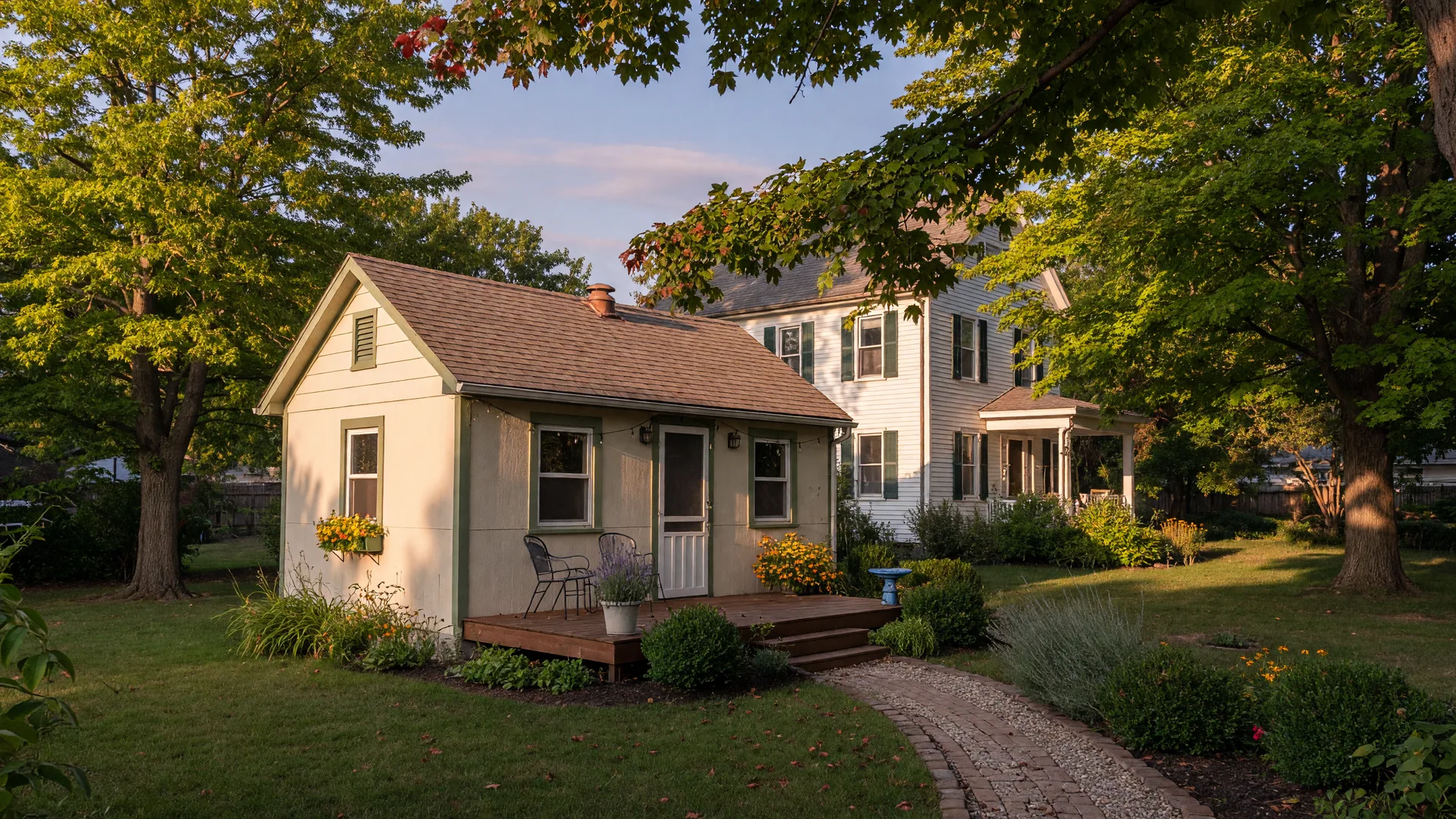
If you have been watching the housing shortage conversation in Northern New Jersey, you have probably started to hear a lot about ADUs, short for accessory dwelling units. Montclair just launched a dedicated ADU Development Project to help homeowners explore building one, and New Jersey is actively moving toward statewide rules that would make ADUs easier on single-family lots everywhere.
This matters whether you are a homeowner wondering about a source of rental income, a first-time buyer checking whether a property could ever fit a legal secondary unit, or a seller trying to understand what actually adds value in Essex County's competitive market. Let me walk through what the program means, why it is timely right now, and how it should factor into how you think about a home's value.
- 1.A legal ADU can add real value and income. In a hot market like Montclair, a well-built secondary unit is a differentiator that attracts more buyers and supports a higher price.
- 2.Zoning is everything in 2026. Montclair's new program helps you figure out what is feasible on your specific lot before you spend a dollar.
- 3.Statewide rules are coming. If New Jersey's pending legislation passes, ADU potential could open up across Essex County, not just in Montclair.
- 4.Legal matters more than big. An unpermitted or nonconforming unit can be a liability and an appraisal question, not an asset.
What is an ADU and why is everyone talking about it
An accessory dwelling unit is a secondary, self-contained living space on the same property as a single-family home. It has its own entrance, its own kitchen, and its own bathroom. It can be a converted basement or attic, an attached unit over a garage, or a standalone cottage in the backyard. You may know them as in-law suites, granny flats, or backyard cottages.
The idea has caught fire across the country because it adds housing supply in established neighborhoods without large-scale development. Instead of tearing down a home or building a big apartment building, a homeowner uses land they already own. That is why Montclair, a built-out township with almost no undeveloped land, sees ADUs as one of the few realistic ways to add moderately priced housing.
Montclair's new ADU Development Project offers homeowners feasibility assessments, design and permitting guidance, and help navigating zoning and building codes. The township is especially interested in ADUs that can rent at below-market rates and in using them as a way for older residents to age in place. Meanwhile, at the state level, a bill that would allow ADUs on single-family lots across New Jersey has advanced to the Senate Budget and Appropriations Committee. If it passes, it would override local zoning restrictions in many communities.
What a legal ADU does to home value in Essex County
In markets where ADUs are established, a legal, well-built unit typically increases what buyers will pay and how many buyers are interested in a property at all. The reasons are practical rather than mysterious.
First, a legal ADU adds usable square footage and potential income. A buyer looking at a Montclair home can see a path toward rental income each month, or a quiet place for an aging parent, or a spot for an adult child, or a dedicated home office that feels separate from the main house. Any one of those is a strong motivator. Several of them together attract a much larger pool of buyers.
Second, a legal ADU makes a home genuinely rare. Montclair already ranks among the hottest places to buy a home in the country, with single-family homes commonly priced above $900,000 in the most competitive sections. Turnkey homes and homes with extra flexibility sell faster and attract the most offers. A property with an existing, permitted ADU stands out.
That is the honest part I want to emphasize. A home with a legal ADU can command a premium, but the premium depends on quality, legality, and how the unit fits the neighborhood. A sloppy, unpermitted conversion can be the opposite of an asset. It can raise inspection red flags, complicate financing, create appraisal questions, and leave the buyer with a headache at the closing table.
- Montclair: single-family homes routinely sell for $900K+ and well over $1M, with the most competitive sections seeing sale-to-list ratios well above 100%. Extra legal flexibility is a strong differentiator here.
- Bloomfield: a turnkey three-bed in good condition runs $625K+, and well-priced homes often sell over asking.
- West Orange: a comparable home runs $600K+, with many homes selling above list in competitive neighborhoods.
For buyers: what to look for when ADU potential matters to you
If you are shopping in Montclair or elsewhere in Essex County and the idea of rental income or multigenerational flexibility appeals to you, there are a few practical things to keep in mind as you tour. A home that already has a legal, well-built ADU is the most straightforward option, but they are genuinely rare and usually priced accordingly. The more common scenario is a property that could accommodate one later, like a large lot, a detached garage, or a walkout basement.
I always recommend checking three things before you fall in love with a property's potential: current zoning for the specific lot, setback and coverage constraints, and the realistic cost of a comparable project. Montclair's new program is designed to help with exactly this kind of feasibility homework. Because the rules can change, buyers who understand the process today have an advantage over those who assume any big basement or garage means an ADU is possible.
For homeowners and sellers: income potential and preparation
For homeowners, an ADU can be a meaningful source of supplemental income, and in a high-cost market like Montclair that can make a real difference. But be honest with yourself about the full picture. Building or converting costs money and takes time, and you need permits, inspections, and often a separate utility or insurance setup. Rental income has tax consequences, and so does the impact on your property assessment.
For sellers, the message is to make your options clear to buyers rather than leaving them guessing. If your home has a legal secondary unit, a permitted accessory space, or clear ADU potential, say so in the listing and in your disclosure. Buyers who are searching for flexibility will pay attention, and that attention translates directly into more showings and better offers.
If you are preparing a home for market, I talk through this kind of positioning all the time with Bloomfield, West Orange, and Montclair sellers. Sometimes the smartest strategy is not a big renovation at all, but simply presenting the legal flexibility your property already has.
The bottom line on ADUs in Essex County
Montclair's ADU program is a thoughtful, incremental answer to a stubborn regional problem, and pending state legislation could make ADU potential relevant far beyond Montclair. For buyers, a legal secondary unit or clear ADU potential adds genuine flexibility in a market where homes sell fast and often above asking. For homeowners, it is a possible income source, but only when done legally and done well.
Every property is different. If you are curious whether a home you are considering could ever fit an ADU, or whether your own property has value you are not currently capturing, I am happy to take a look and give you an honest read. No pressure, just a clear conversation about your options in the Essex County market.
Related Reading
Want to know whether your property or a home you are considering has ADU potential? Let's talk through it.