NJ Transit Fare Increase 2026: What It Means for Your Essex County Home Search
By Sorelle Crooks, Realtor® | Real Broker LLC | NJ License #2185837
Published August 13, 2026
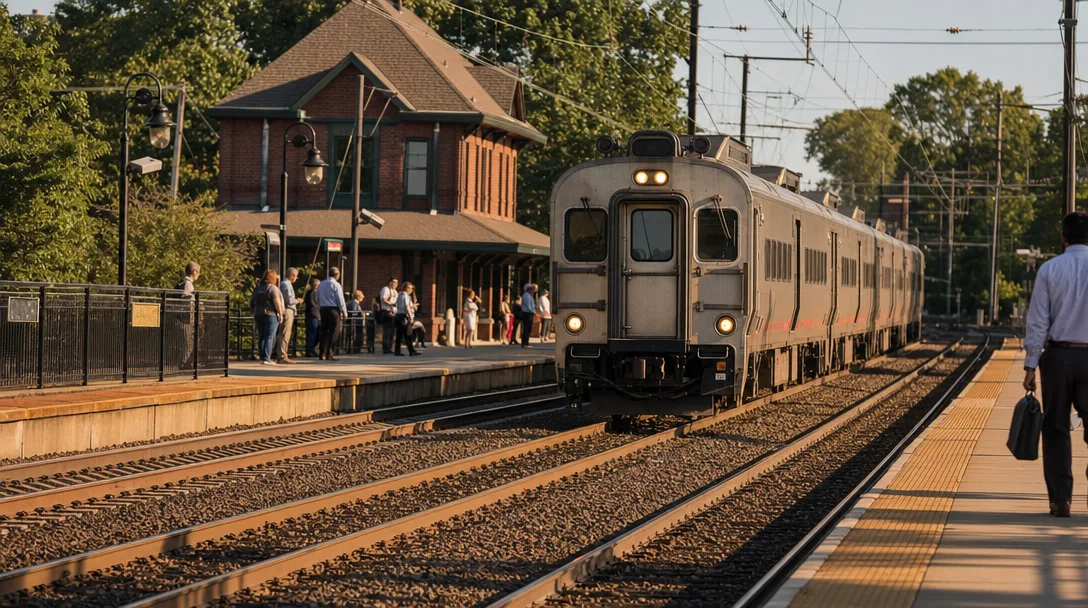
If you're an NYC commuter thinking about buying a home in Essex County, New Jersey, there's a new line item in your monthly budget to plan for. NJ Transit raised fares 3% on July 1, 2026, the second consecutive annual increase under the board's multi-year fare policy. It applies systemwide to rail, bus, light rail, and Access Link. Here's what the fare hike actually costs you, and how to factor it into your home search in Bloomfield, West Orange, and Montclair.
- NJ Transit fares rose 3% on July 1, 2026, the second straight annual hike, applying systemwide to rail, bus, and light rail.
- On a typical monthly pass from Bloomfield or Montclair, that adds up to roughly $10 to $25 per month depending on your line and zone. It matters, but it doesn't change the buy-vs-rent math in Essex County.
- Commuting costs are one line item in a bigger picture. Homes in Bloomfield sell at $625K+, West Orange at $600K+, and Montclair at $900K+, usually over asking.
- Budget a realistic total monthly cost (mortgage, taxes, insurance, and transit) before you start touring, so the fare hike doesn't surprise you after you've made an offer.
What exactly changed with NJ Transit fares?
The 3% fare increase took effect July 1, 2026, and it is the second annual increase under a board-approved policy that raises fares every year. It applies across the board: rail, bus, light rail, and Access Link. For commuters on the Montclair-Boonton and Morris & Essex lines (the ones that serve Bloomfield, Montclair, and the South Orange station used by West Orange riders), the increase shows up directly in your monthly pass price.
On top of the fare hike, 2026 has been a busy year for NJ Transit riders. The Portal Bridge cutover in February and March redirected weekday Midtown Direct trains to Hoboken, a systemwide schedule reset took effect May 31, and severe storms in July caused service disruptions on the Morris & Essex and Montclair-Boonton lines that took weeks to fully repair. My guide to the 2026 NJ Transit schedule changes covers what riders in Essex County need to know about the new timetables.
How much does the fare hike actually cost?
Let's be honest about the numbers. A 3% increase on a monthly rail pass in the $350 to $450 range works out to roughly $10 to $25 more per month, depending on your exact origin station and zone. That is real money, but it's not a budget breaker. Here's how I put it in perspective for my clients:
- Bloomfield: Two stations on the Montclair-Boonton line get you to Penn Station in about 30 to 35 minutes. A monthly pass from Bloomfield is one of the more affordable rail options in Essex County.
- Montclair: Six stations serve the town with 35 to 45 minute rides to Midtown. Monthly passes are higher given the longer zone, but so is everything else about Montclair.
- West Orange: Most riders take the free town jitney to the South Orange station, then catch the Midtown Direct train. The jitney remains free, which keeps the total commuter cost lower than you might expect.
The bigger question isn't the 3%. It's whether the total cost of living, including transit, still beats renting in NYC. For almost every buyer I work with, the answer is still clearly yes. My NJ Transit commute guide walks through the options town by town.
How should you factor transit costs into your home budget?
Too many buyers calculate their monthly budget with mortgage and property taxes and forget the commute. In Essex County, the property tax bill is often the biggest surprise for NYC transplants, and transit is the recurring cost people forget to model. Here's the simple framework I use:
- Estimate your true monthly payment. Mortgage principal and interest, property taxes, and homeowners insurance. NJ property taxes vary a lot by town, so use the real number for the house you're considering, not an average.
- Add your transit cost. Monthly rail pass plus any jitney or bus fare (West Orange's jitney is free) plus parking at the station if you drive there.
- Compare against your NYC rent and commute. A $3,500 Manhattan rent plus a subway card often totals more than a Bloomfield mortgage plus taxes plus a rail pass for a house with a yard.
- Build in a cushion. Fare policy now includes annual increases, so expect transit costs to rise a little each year. It's a small line item, but planning for it keeps your budget honest.
For a deeper look at how commuting costs and market conditions interact this year, my commuter comeback analysis explains why return-to-office rules are sending more NYC buyers to Essex County train towns.
Pricing heads-up: In Essex County, homes routinely sell for above asking – the county-wide average is 112.4% of list price (Bergen+Essex Market Pulse, July 2026), the highest of any county in NJ. Bloomfield's Q2 median is ~$700K–$725K with a 113% sale-to-list ratio, averaging 7 offers per listing (17–35 days on market). West Orange's median is ~$660K–$700K (up 6.3% YoY) with 85% of homes selling over asking and a year-to-date over-asking premium of 10.7%. Montclair single-family homes range from ~$900K to well into the millions, with the most competitive sections seeing 126% sale-to-list ratios. The average buyer pays about $68,000 over asking on a $750K median. A turnkey 3-bed/2-bath in good condition in Bloomfield costs $625K+; in West Orange it costs $600K+. Budget for the sale price, not the list price.
Does the fare hike change the buy-in-New-Jersey math?
Short answer: no. A $10 to $25 monthly increase does not move the needle on the decision to buy in Essex County versus renting in NYC. The gap between a Manhattan or Brooklyn rental and a three-bedroom home in Bloomfield, West Orange, or Montclair is measured in thousands of dollars per month, not tens. The fare hike is worth knowing about and budgeting for, but it's not a reason to change your plans.
What should change your plans is preparation. Homes in these towns routinely sell above list price. Bloomfield's median sale price is around $700K with a 113% sale-to-list ratio. West Orange's median sits near $697K with 85% of homes selling over asking. Montclair single-family homes run $900K and up, with the most competitive sections seeing 126% sale-to-list ratios. If you are budgeting for the list price, you are budgeting wrong. Budget for the sale price, and get pre-approved before you start touring.
The bottom line
The NJ Transit fare increase is one more reason to be thoughtful about your total monthly costs, not a reason to abandon the idea of moving to Essex County. The commute from Bloomfield, West Orange, or Montclair remains faster than many intra-borough NYC commutes, and the value proposition still favors New Jersey for most buyers. Plan for the transit costs, understand the over-asking market, and you'll be in a strong position when the right home comes along.
If you're ready to start looking, I'll walk you through it. No pressure, just honest guidance on what the numbers really look like for your situation.
Ready to run the numbers on your Essex County move?
Let's talk through commute, budget, and the right town for your family.
You Might Also Like