Public Transportation and Commuter Options in West Orange NJ
By Sorelle Crooks, Realtor® | Real Broker LLC | NJ License #2185837
Published July 2026 · Last updated July 2026
The commute is usually the first thing NYC buyers ask about when they're considering a move to West Orange, NJ – and it should be. It's one of the biggest lifestyle changes you'll make.
The good news: West Orange is well-connected to New York City via bus, a free jitney shuttle to nearby train stations, and straightforward highway access. You won't have the 24/7 subway convenience you're used to, but you'll have reliable alternatives that work for most schedules. Here's a detailed breakdown of your commuter options.
The West Orange Jitney Shuttle: Your Free Link to the Train
This is one of the most valuable and underappreciated perks of living in West Orange. The township operates a free jitney shuttle service on weekday mornings (6:00–9:00 AM) and evenings (5:00–8:30 PM) that connects West Orange residents to nearby NJ Transit train stations.
Here's how it works:
- Morning service (6:00–9:00 AM): the jitney picks up at designated stops throughout West Orange and drops off at the Orange, South Orange, and Brick Church train stations, where you can catch NJ Transit Midtown Direct trains to New York Penn Station.
- Evening service (5:00–8:30 PM): the jitney runs in reverse, picking up at the train stations and dropping off at stops throughout West Orange.
- Real-time tracking: you can track the jitney in real time via the Passio GO app, so you're not standing at a stop wondering where it is.
- No cost: the service is free for West Orange residents – one of the few free public transit connections you'll find in the suburbs.
The jitney essentially solves West Orange's biggest transit challenge – the lack of a train station within town limits. By shuttling residents to nearby stations, it makes the NJ Transit rail system accessible without requiring you to drive and park at the station every morning. For many commuters, this is the primary way they get to NYC.
NJ Transit Train Stations Near West Orange
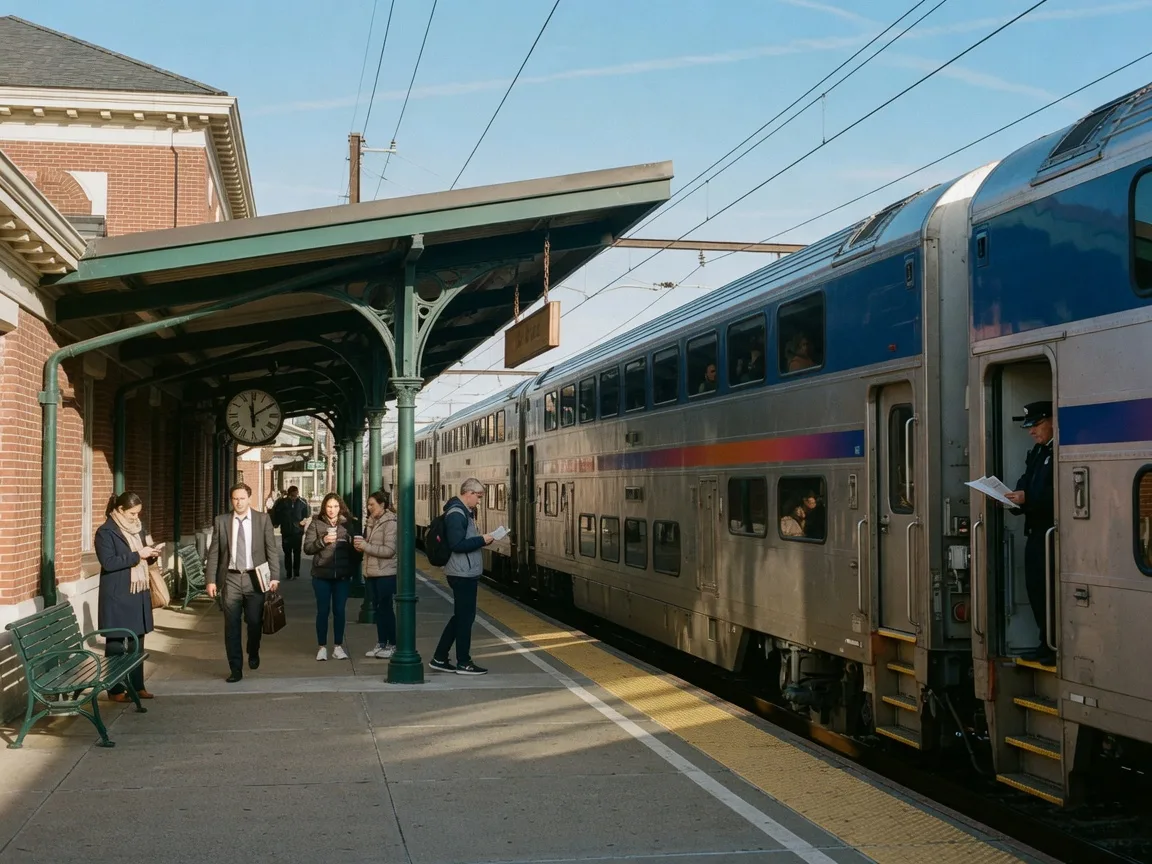
West Orange doesn't have its own NJ Transit train station, but it's surrounded by several options on the Montclair-Boonton Line, which runs directly into New York Penn Station:
- South Orange Station – approximately 5–10 minutes from most parts of West Orange. This is the most commonly used station for West Orange commuters. South Orange is a charming village with its own downtown, restaurants, and walkable streets.
- Maplewood Station – roughly 10–15 minutes away, serving the neighboring community of Maplewood. Another solid option with good parking availability.
- Orange Station – about 10 minutes from central West Orange, located on the NJ Transit system and served by the jitney shuttle.
- Brick Church Station (East Orange) – another jitney stop, roughly 10–15 minutes from West Orange.
Key details about the train commute:
- Travel time to Penn Station: roughly 40–55 minutes depending on whether you catch an express or local train. The Montclair-Boonton Line runs Midtown Direct service, which takes you straight to Penn Station without transfers.
- Frequency: during peak commuting hours, trains run roughly every 20–30 minutes. Off-peak service runs about once an hour.
- Monthly pass cost: approximately $260–$310 for a monthly pass, depending on the fare zone. South Orange is in Zone 7; prices may vary by station.
- Service hours: the first morning train typically departs around 5:30–6:00 AM, with the last train leaving Penn Station around midnight on weekdays.
One thing to note: the Montclair-Boonton Line does not run 24 hours. If you work late in the city regularly, you'll need a backup plan – rideshare, a friend with a car, or staying over in the city occasionally. This is the most common adjustment NYC transplants have to make.
NJ Transit Bus Route 101 to NYC
For West Orange residents who prefer the bus, NJ Transit Route 101 provides direct service to the Port Authority Bus Terminal in Midtown Manhattan. This is one of the most practical commute options for people who live in parts of West Orange closer to the bus route.
- Route: the 101 runs through West Orange and neighboring towns, terminating at the Port Authority Bus Terminal – which for many Midtown workers is actually more convenient than Penn Station.
- Travel time: roughly 40–60 minutes depending on traffic conditions through the Lincoln Tunnel.
- Frequency: buses run frequently during peak commuting hours, with reduced frequency during off-peak times.
- Monthly bus pass: a NJ Transit monthly bus pass runs roughly $220–$260, depending on the route and zone.
The bus has a few advantages over the train: the Port Authority is often more convenient for Midtown workers, and bus stops in West Orange are easy to reach from most neighborhoods. The main downside is traffic – on a bad day, the bus can take 60–75 minutes instead of the usual 40–60.
A note on Route 107: some NYC transplants ask about the NJ Transit 107 bus, which is a popular commuter route. However, Route 107 primarily serves Irvington and South Orange rather than West Orange directly. West Orange commuters typically use the 101 for direct bus service or the jitney shuttle for train station connections.
Driving to NYC: Tunnels and Highways
If you drive, West Orange's location gives you solid highway access for getting into Manhattan and beyond:
- I-280 runs along the southern edge of West Orange, connecting to I-95 and the NJ Turnpike. This is your primary route to the Holland Tunnel and Lincoln Tunnel into Manhattan.
- Garden State Parkway is accessible via I-280, connecting you to the broader NJ highway network and eventually to Newark and the tunnels.
- Route 10 and Route 24 provide additional routing options depending on your destination within the region.
The drive to Midtown Manhattan is roughly 30–40 minutes without traffic. But let's be realistic: traffic through the tunnels and into the city is rarely absent. During peak hours, budget 50–75 minutes for a drive into Manhattan. Tunnel tolls are significant – currently around $16–$17 during peak hours for passenger vehicles heading into NYC, and congestion pricing adds additional costs.
For many West Orange residents, driving into the city is a sometimes-thing rather than an everyday thing. It makes sense for weekend trips, evening events, or days when you need a car in the city. For the daily commute, the bus, jitney-to-train combination, or a combination of both is almost always more practical and cost-effective.
Ride-Sharing and Airport Access
Uber, Lyft, and other rideshare services are all available in West Orange. Wait times are typically reasonable – usually 5–10 minutes, compared to the near-instant availability in Manhattan. For airport runs, West Orange's location is actually quite advantageous:
- Newark Liberty International Airport is roughly 20–25 minutes away, making it the most convenient option for most flights
- LaGuardia and JFK are accessible via the NJ Turnpike and bridges, typically 45–75 minutes depending on traffic
The proximity to Newark Liberty is a genuine perk that many West Orange residents appreciate. Having a major international airport 20 minutes away – with easy highway access – is something you definitely don't take for granted.
Getting Around West Orange Without a Car
Let's be honest about this one. West Orange is not a walker's paradise the way Manhattan or Brooklyn is. The town is spread out, and while certain corridors – Main Street, parts of Pleasant Valley Way – are reasonably walkable for errands and dining, most daily activities will require a car.
That said, walkability is a consideration when choosing where in West Orange to live. Homes near downtown, near the South Orange border, or along the Pleasant Valley Way corridor tend to have better walkability to shops, restaurants, and services. And South Mountain Reservation provides walkable green space that's accessible from many neighborhoods.
For families, the township jitney and local shuttle services help fill the gap for teens and adults who don't drive. And for the NYC commute specifically, the jitney-to-train or bus combination means you don't need to drive yourself to the station.
The Transition from NYC Transit to Suburban Commuting
This is the part I always talk through with my clients, because it's a real lifestyle shift. In NYC, transit is everywhere and runs constantly. In West Orange, you'll plan your commute more intentionally. You'll check schedules. You'll have a primary route and a backup. And you'll probably own a car for local errands, weekend trips, and flexibility.
Here's what I've seen from the people who've made this transition successfully: they treat the commute as a trade-off, not a sacrifice. You're trading 24/7 subway access for a quieter, more spacious, more affordable lifestyle – and the commute itself becomes part of your routine rather than a constant stressor. Many people use the train ride for reading, work, or just decompressing. The jitney makes it feel seamless – you walk to the jitney stop, ride to the station, and hop on the train. It's a predictable, manageable routine.
The bottom line: West Orange's transportation options are solid. The jitney shuttle is a standout perk, the train and bus get you to NYC reliably, and the highway access covers the rest. It's different from city living, but it works – and most of my clients adjust within a few weeks.
If you're thinking about the move and want to talk through what the commute would actually look like for your specific situation – where you work, what your hours are, what your priorities are – I'm happy to walk through it. I've helped a lot of NYC-to-West Orange relocators figure this out, and I can give you a realistic picture.
You Might Also Like
Questions about the commute or getting around West Orange? Let's talk.