Bloomfield Is Upgrading Storm Drains to Ease Urban Flooding

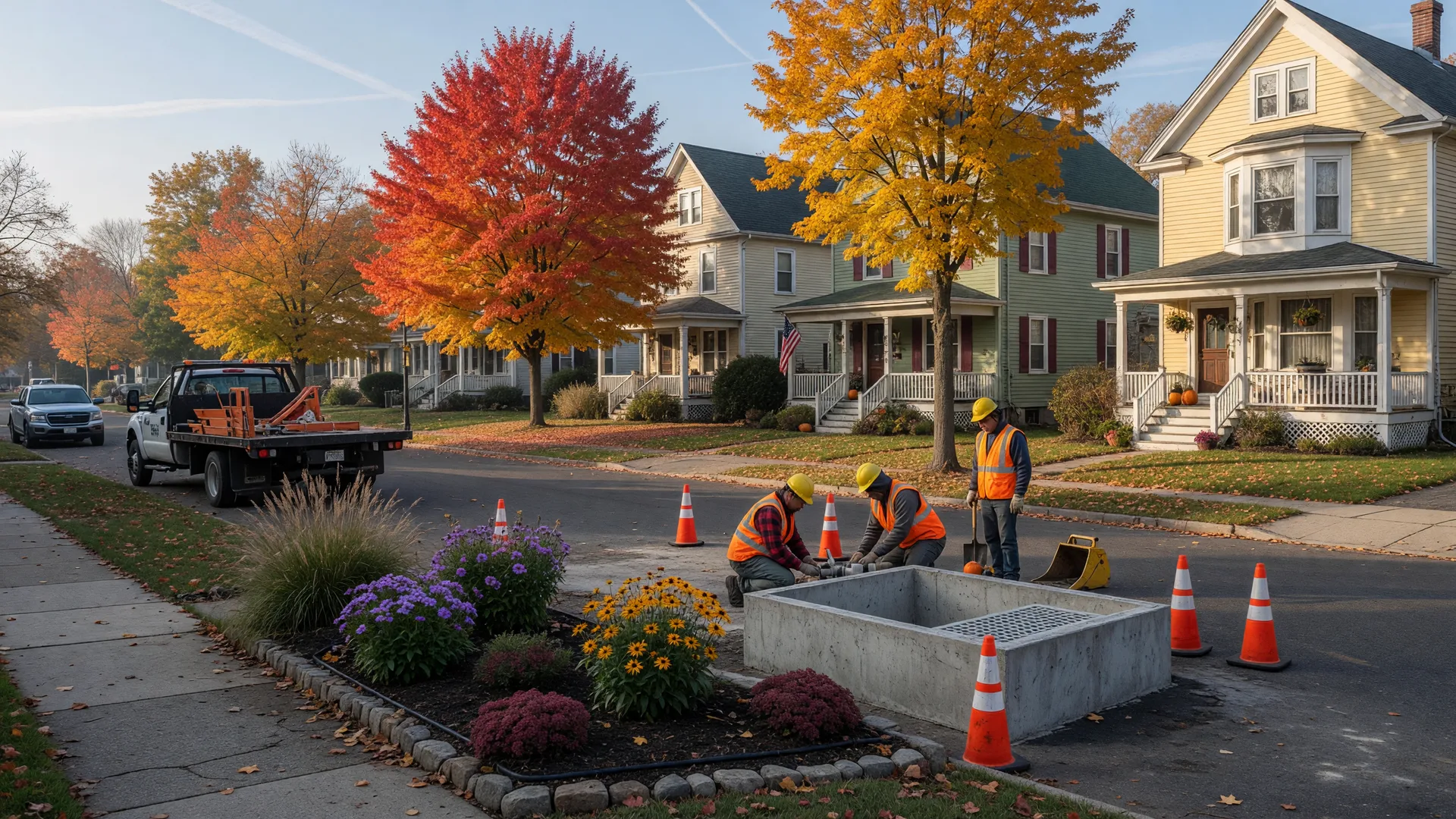
In early October, Bloomfield's engineering team laid out how the township is responding to the storm-by-storm flooding that has hit Essex County this year: adding drains, basins, and rain gardens so runoff has somewhere to go after isolated downpours. Township Engineer Paul Lasek described the recent flooding as "urban flooding" caused by single rainstorms rather than sustained river events, and the sustainable stormwater work is the town's answer to it. Here is what the update means for homeowners, buyers, and anyone watching how well a neighborhood handles water.
What the engineering department said
TAPinto Bloomfield's October 11 cover story, "Township Engineering Department Prioritizes Sustainable Infrastructure," by Julia DiGeronimo (updated October 12), captured the department's pitch for what it calls sustainable stormwater infrastructure. Lasek pointed to the pattern behind the puddles and street flooding across Essex County this fall: "Many of these isolated rainstorms caused different levels of flooding throughout Essex County." His framing matters because it changes the fix. This kind of flooding is driven by single, intense storms overwhelming the pipes and gutters in a specific spot, not by a river coming over its banks, so the response is a network of small improvements rather than one big project.
The township's approach, per the report, is "adding drains, basins and rain gardens to ease runoff." In plain terms: more catch basins where water pools, detention or infiltration basins that hold water back, and rain gardens planted to soak it into the ground instead of sending it straight down the street. Patch's mid-October coverage of Bloomfield ("How Bloomfield is upgrading drains to tackle nuisance flooding") picked up the same thread, so the work is now in the regular local news cycle rather than buried in a town memo.
Why "urban flooding" is different for homeowners
For a homeowner, the distinction between urban flooding and river flooding shows up in everyday experience: a street that ponds during a heavy summer downpour, a low-lying intersection that closes for an hour, a basement that takes on water after a cloudburst. These events rarely make the big news a river flood does, but they shape how a neighborhood feels to live in and how a buyer reads a property.
They also shape the practical questions buyers should ask. If a street has a history of ponding, it is worth asking when the drains near the property were last cleaned or upgraded, whether the home has a sump pump and where it discharges, and what the town has planned for the block. Sellers, for their part, should expect buyers to ask about any past water issues, so having the town's drainage work in the neighborhood narrative is genuinely useful, not just convenient.
What it means for homeowners and buyers
- Drainage work is a resilience signal. Towns that invest in drains, basins, and rain gardens are responding to real, observed flooding rather than waiting for a worse event. That kind of response tends to support, not hurt, long-term property values in the affected blocks.
- Ask about the block, not just the house. Before you buy, check street drainage, sump pumps, and any FEMA flood-zone designation for the property, and ask whether recent work has addressed the street's trouble spots.
- Rain gardens and basins are a plus, not a nuisance. These improvements are designed to take water off the street and the lawn; they also add landscaping and filter runoff before it reaches streams.
- It is part of a countywide theme. Bloomfield's effort connects to the broader stormwater and flood-mitigation work Essex County is coordinating, so the pattern here fits a larger regional investment story.
The bottom line
Bloomfield's engineering department is tackling the town's storm-by-storm flooding with a practical, visible toolkit: more drains, basins, and rain gardens, framed by Township Engineer Paul Lasek as a response to "urban flooding" from isolated rainstorms. The work showed up in TAPinto's October 11 feature and in Patch's mid-October coverage, which means it is worth treating as an active, ongoing program rather than a one-off. For homeowners and buyers, the takeaway is straightforward: drainage is part of a home's real story, and this town is investing in it.
Sources
This story is based on TAPinto Bloomfield's "Township Engineering Department Prioritizes Sustainable Infrastructure" (Julia DiGeronimo, October 11-12, 2026) and Patch Bloomfield's mid-October item, "How Bloomfield is upgrading drains to tackle nuisance flooding." For the earlier flood-fighting context, see this site's August flood prevention update and the countywide stormwater and flood mitigation story.
Have a tip about local infrastructure work?
I cover local real estate and development news across Bloomfield, West Orange, Montclair, and Essex County. If you see road, drainage, or utility work in your neighborhood and want to know what it means, I'd love to hear about it.