Montclair Schools Triple Internet Speed and Deploy 430 Cameras: What the Tech Overhaul Means

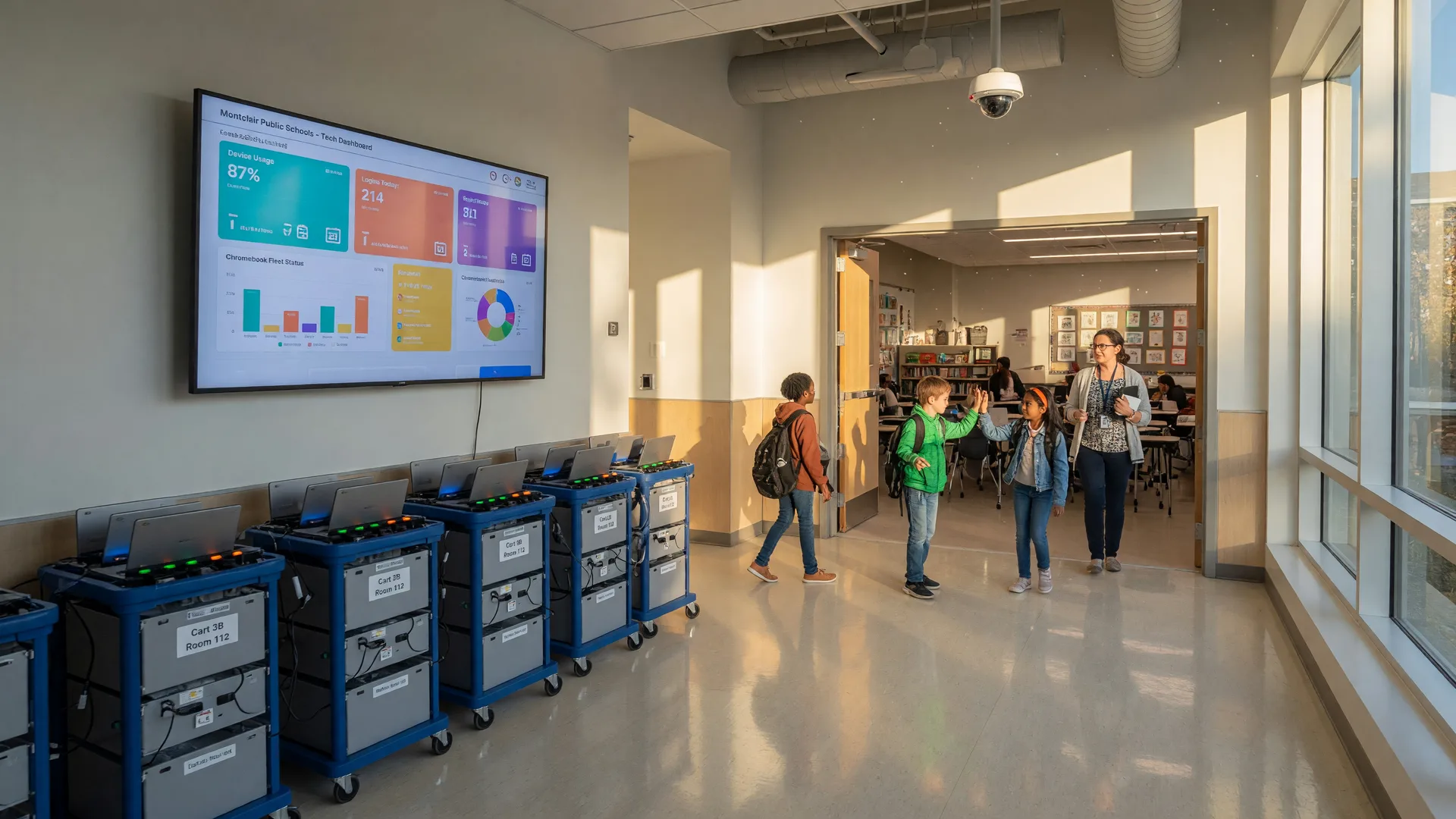
Montclair Public Schools has been rolling out a broad technology upgrade over the past year: internet speed tripled through a federal E-Rate program, 430 security cameras deployed across the district, and a classroom technology overhaul that moved students off Google accounts, scaled back Chromebook use, and blocked YouTube for the youngest grades. Director of Technology Christopher Graber presented the work to the Board of Education, and The Montclair Pod refreshed its coverage of the changes on October 8. Here is what the upgrades mean for families weighing Montclair schools.
This matters for homebuyers because school quality and day-to-day classroom experience are among the biggest drivers of where families choose to live in Essex County. How a district spends on infrastructure, even as it works through a budget crisis, is a signal about its priorities and its long-term planning.
Faster internet, funded by a federal program
The district tripled its internet speed through an E-Rate-funded internet and core switch upgrade. E-Rate is the federal program that discounts internet access and network equipment for schools and libraries, so the faster connection came through a program designed to keep school technology affordable, rather than a new local tax line. For families, the practical effect is more reliable online testing, smoother video instruction, and less congestion when the whole school is online at once.
430 security cameras across the district
The district deployed 430 security cameras as part of a broader physical-security program. The June 2026 technology update broke the rollout down by building, with Glenfield Middle School getting 94, Hillside 42, Nishuane 24, Northeast 36, the DLC 25, Renaissance 26, and Watchung 29, while Montclair High School's on-premise camera project was completed back in 2022. The camera work sits alongside cybersecurity and network infrastructure upgrades, and the district also moved its email system to montclairps.org.
For parents, security cameras in schools are usually a reassurance, but they are also worth a question on a school tour: how the footage is stored, who can access it, and how long it is kept. Those details tell you how thoughtfully a district handles the technology it installs.
A classroom technology overhaul
The biggest day-to-day change for students came in July 2026, when the district moved student email, storage, and logins from Google to Microsoft, retiring student Gmail and moving files to OneDrive. On top of that, the district scaled back Chromebook use: kindergarten through second grade are limited to benchmark testing, grades three through five use a shared cart-based model, and grades six through eight are capped at about 20 minutes per course per week. YouTube is blocked for grades K through 8, and a new 2026-27 policy restricts personal phones, smart watches, tablets, and earbuds.
These changes build on the district's earlier, screen-careful direction, including the new AI and technology policies the Board of Education introduced in September. The through-line is a district deliberately reducing passive screen time and tightening the guardrails around classroom tech.
Why the timing stands out
The upgrades are happening a year into a district fiscal crisis that has forced layoffs, club cuts, and tax increases. That makes the technology spending notable in both directions. On one hand, it shows the district is still investing in infrastructure families rely on. On the other, it is a reminder that Montclair schools are balancing real budget pressure, so families should weigh both the improvements and the financial strain when comparing towns.
What this means for families and buyers
- A real infrastructure upgrade. Faster internet and more security cameras are tangible improvements to the school experience, and they came through a federal program rather than a fresh local tax hit.
- Less screen time is the direction. The Chromebook limits, YouTube block, and phone restrictions mean a more discussion-based classroom, which many families moving from the city actively want.
- Ask about enforcement and storage. On a school tour, ask how the camera footage is managed and how the device rules are enforced. Good answers are a sign the plan is more than paper.
What to watch next
Watch how the device policies hold up in practice through the school year, and whether the technology upgrades continue as the district works through its budget recovery. It is also worth watching whether the district's fiscal situation improves enough to keep funding infrastructure, since that is the balance that will shape the school experience for years.
The bottom line
Montclair is pairing real technology upgrades with a deliberately screen-careful classroom model, all while managing a difficult budget. For families, that mix is worth understanding before you choose a town, because it shapes the day-to-day experience your kids will have.
If you are comparing Essex County schools and neighborhoods and want an honest read on which town fits your family, I am happy to walk through it with you. No pressure, just local perspective.
Sources
This story is based on The Montclair Pod's coverage of the district technology updates (published July 4, 2026, refreshed October 8, 2026), the Montclair Public Schools Technology Update presentation (June 17, 2026), and The Montclair Pod's back-to-school coverage of the new phone and tech rules.
Last verified: October 8, 2026. The district tripled internet speed, deployed 430 security cameras, and moved students to Microsoft accounts as part of its 2026 technology overhaul.
Have a tip about local development?
I cover local real estate and development news across Bloomfield, West Orange, Montclair, and Essex County. If you hear about new construction, zoning changes, or neighborhood issues, I would love to hear about it.